Best overall: a gentle, non-exfoliating facial for easily irritated skin. Best for blackheads: selective professional extraction. Best for oily, clogged skin: a carefully selected salicylic-acid facial. This 2026 guide compares the best facials for acne-prone skin and explains what to ask before booking; Sugar Me Softly offers facials for local clients in Murray and the Salt Lake Valley.
- The best facials for acne-prone skin support comfort without replacing acne treatment.
- Choose a gentle facial for sensitive skin; discuss salicylic acid when clogged pores are the main concern.
- Professional extraction targets blackheads, not deep, painful acne bumps.
- Sugar Me Softly offers facials in Murray; discuss your acne routine before choosing a service.
- Skip aggressive exfoliation when your skin is irritated, peeling, or sore.
Why this matters
Acne-prone skin does not always need a stronger facial. If your cleanser, acne medication, and exfoliating products already leave your face tight or tender, adding more exfoliation creates another source of irritation. Choose the facial around your current skin condition, not the promise of a deep clean.
A facial is supportive care, not a substitute for acne treatment. The American Academy of Dermatology advises allowing acne treatment 6–8 weeks before judging early improvement; more complete clearing can take 3–4 months. A single appointment does not replace that process.
For your 2026 appointment, separate the concern you want addressed: surface dryness, blackheads, ongoing inflamed breakouts, or marks left after acne. Those concerns do not call for the same approach. Deep, painful bumps, scarring, and persistent acne belong in a dermatologist conversation.
What makes the best facials for acne-prone skin
Use these criteria before choosing a treatment name:
- Skin comfort: The service should account for burning, peeling, tenderness, and recent irritation rather than treating every acne-prone face alike.
- A clear purpose: Hydration, blackhead extraction, and treatment of discoloration are different goals. Ask which concern the facial addresses.
- Medication compatibility: Disclose retinoids, benzoyl peroxide, exfoliating acids, and prescription treatments before discussing exfoliation.
- Controlled intensity: More steps do not make a better facial. Avoid stacking scrubs, acids, and extensive extraction on reactive skin.
- Appropriate boundaries: A provider should distinguish cosmetic care from acne that needs medical assessment.
- Practical aftercare: You should leave knowing what to use, what to pause, and which symptoms require follow-up.
For 2026, choose by those criteria rather than by words such as detox, purifying, or pore-cleansing. Your skin's tolerance matters more than the menu's adjectives.
Best facials for acne-prone skin at a glance
These are treatment categories, not a list of services offered by Sugar Me Softly. Confirm the actual steps with any provider before booking.
| Rank and facial type | Best for | Standout feature | Key limitation |
|---|---|---|---|
| 1. Gentle, non-exfoliating facial | Easily irritated, acne-prone skin | Focuses on cleansing and moisturizing without extra exfoliation | Does not directly treat persistent acne |
| 2. Selective extraction facial | Accessible blackheads and selected clogged pores | Targets individual pore blockages | Unsuitable for deep, painful lesions |
| 3. Salicylic-acid facial | Oily skin with surface congestion | Uses an exfoliating ingredient also used in acne products | Can irritate skin already exposed to acne treatments |
| 4. Clinician-directed superficial peel | Selected cases of post-acne discoloration | Controlled chemical exfoliation | Requires assessment of irritation and pigment risks |
| 5. LED adjunct facial | People discussing a non-exfoliating add-on | Avoids abrasive scrubbing and extraction when used alone | Acne evidence and treatment protocols vary |
1. Gentle facial: best for easily irritated acne-prone skin
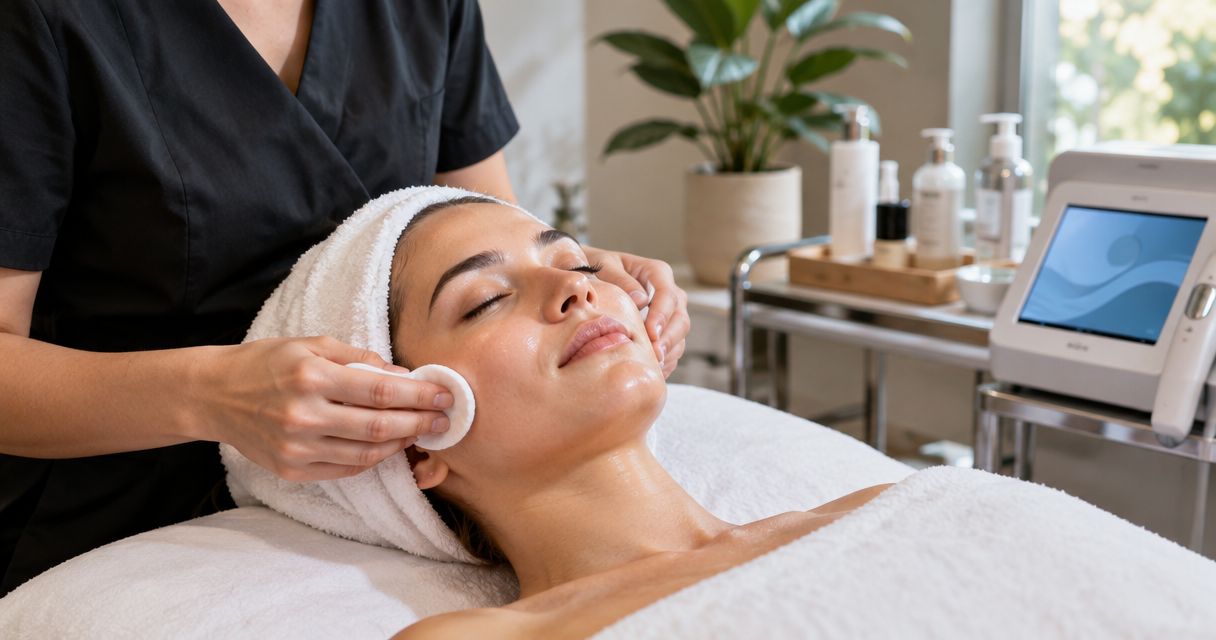
A gentle, non-exfoliating facial keeps the focus on cleansing and moisturizing. The useful distinction is what it leaves out: abrasive scrubs, unnecessary acids, and forceful manipulation of sore skin. Ask for the treatment steps rather than assuming that a soothing service name means no exfoliation.
Gentle facial pros:
- Avoids adding exfoliation when your skin already feels sensitive.
- Makes comfort the main goal instead of extracting every visible pore.
- Offers a clear starting point for discussing products that sting.
Gentle facial cons:
- Does not replace medication for recurring acne.
- Does not remove every blackhead or address established scars.
- A fragranced mask or unsuitable product can still irritate your skin.
Best for: Acne-prone skin that feels dry, tight, or reactive, provided it is not actively injured or experiencing a significant reaction.
Ask whether exfoliation and extraction can be omitted. Tell the provider if ordinary moisturizer currently burns; that deserves attention before anyone adds another treatment. Noncomedogenic labeling is useful when selecting products, but it is not a guarantee that every formula will suit you.
Verdict: Buy for gentle supportive care; wait if your skin is actively burning, swollen, or raw.
2. Extraction facial: best for accessible blackheads
Professional extraction focuses on selected clogged pores rather than treating acne as one uniform problem. Blackheads are different from deep, tender bumps, and the provider should assess what is appropriate to extract. The objective is controlled removal, not squeezing until everything looks empty.
Extraction facial pros:
- Directly addresses individual accessible blackheads.
- Allows selective treatment instead of whole-face exfoliation.
- Gives you a reason to leave home squeezing out of your routine.
Extraction facial cons:
- Does not prevent new clogged pores by itself.
- Pressure and manipulation can cause irritation or skin injury.
- Deep nodules and cysts are not appropriate extraction targets.
Best for: Blackheads that a qualified provider considers suitable for extraction, without widespread tenderness or active skin irritation.
Ask what the provider does when a pore does not release easily. A sensible plan includes stopping, not increasing force. If acne medication has made your skin fragile or sore, discuss that before agreeing to extraction.
Verdict: Buy for selected blackheads; skip extraction of deep, painful bumps.
3. Salicylic-acid facial: best for oily, congested skin
Salicylic acid is an exfoliating ingredient used in acne products. A facial containing it can add exfoliation to a routine aimed at clogged pores, but the formulation and your existing treatment determine whether that addition makes sense. An ingredient name alone does not establish the right intensity.
Salicylic-acid facial pros:
- Matches a clogged-pore concern more closely than a hydration-only service.
- Uses an ingredient recognized in over-the-counter acne treatment.
- Provides a specific ingredient to discuss during consultation.
Salicylic-acid facial cons:
- Can contribute to dryness, stinging, and irritation.
- Can duplicate exfoliation you already use at home.
- Does not address every form of inflammatory acne.
Best for: Oily, congested skin that tolerates exfoliation, after reviewing your current products and medications.
The FDA's over-the-counter acne drug framework includes salicylic acid at 0.5%–2%. That range describes qualifying acne drug products, not a recommended professional peel strength. Do not use it to choose a salon treatment or assume that a stronger formula produces better results.
Verdict: Buy only after checking compatibility; skip when your skin is peeling or sore.
4. Superficial peel: best for selected post-acne discoloration
A superficial chemical peel uses controlled exfoliation and requires careful selection. It belongs in a conversation about your skin tone, history of dark marks, current acne activity, and medications. Flat discoloration after a breakout is not the same concern as a depressed acne scar.
Superficial peel pros:
- Offers a targeted discussion about surface discoloration and texture.
- Can be selected by a clinician around an individual skin concern.
- Separates treatment of leftover marks from management of active breakouts.
Superficial peel cons:
- Can cause irritation and changes in pigmentation.
- Requires attention to sun protection and aftercare.
- Does not erase deep scars or replace an acne treatment plan.
Best for: Selected post-acne discoloration after professional assessment, especially when pigment changes are a concern.
Ask about experience treating your skin tone and how complications are handled. Do not accept a promise that one peel will clear active acne, erase scars, and remove every mark. Those are different outcomes with different treatment needs.
Verdict: Hold until a qualified clinician confirms the treatment fits your skin and goals.
5. LED facial: best for a non-exfoliating adjunct discussion
An LED facial uses a light-based device rather than relying on scrubbing or chemical exfoliation. Devices and protocols differ, so a treatment name does not tell you the wavelength, eye-protection requirements, or evidence behind the service. Treat it as an adjunct conversation, not an automatic acne solution.
LED facial pros:
- Does not require abrasive exfoliation when used alone.
- Can be considered separately from extraction or peel steps.
- Gives people avoiding exfoliation another option to discuss.
LED facial cons:
- Evidence does not support treating all light devices as interchangeable.
- Photosensitivity and medication use require screening.
- Does not physically remove blackheads or replace established acne treatment.
Best for: People considering a non-exfoliating add-on after reviewing suitability and realistic expectations with a qualified provider.
Ask exactly which device is used and what claim supports the proposed treatment. A calming appointment and an effective acne treatment are not the same thing. Do not stop a prescribed routine simply because a facial includes light therapy.
Verdict: Hold unless the provider explains the device, safety screening, and limits clearly.
How to choose before you book
Use this sequence to keep your 2026 facial appointment focused. You do not need to diagnose yourself; you need to describe what your skin is doing.
- Name your concern: Identify whether you want help with dryness, blackheads, active breakouts, or leftover marks.
- List your products: Include prescriptions, acne washes, spot treatments, acids, and recent procedures.
- Check skin comfort: Mention burning, peeling, tenderness, sunburn, or a recent reaction.
- Confirm the steps: Ask about exfoliation, extraction, masks, devices, and what can be omitted.
- Agree on aftercare: Get clear instructions before treatment begins.
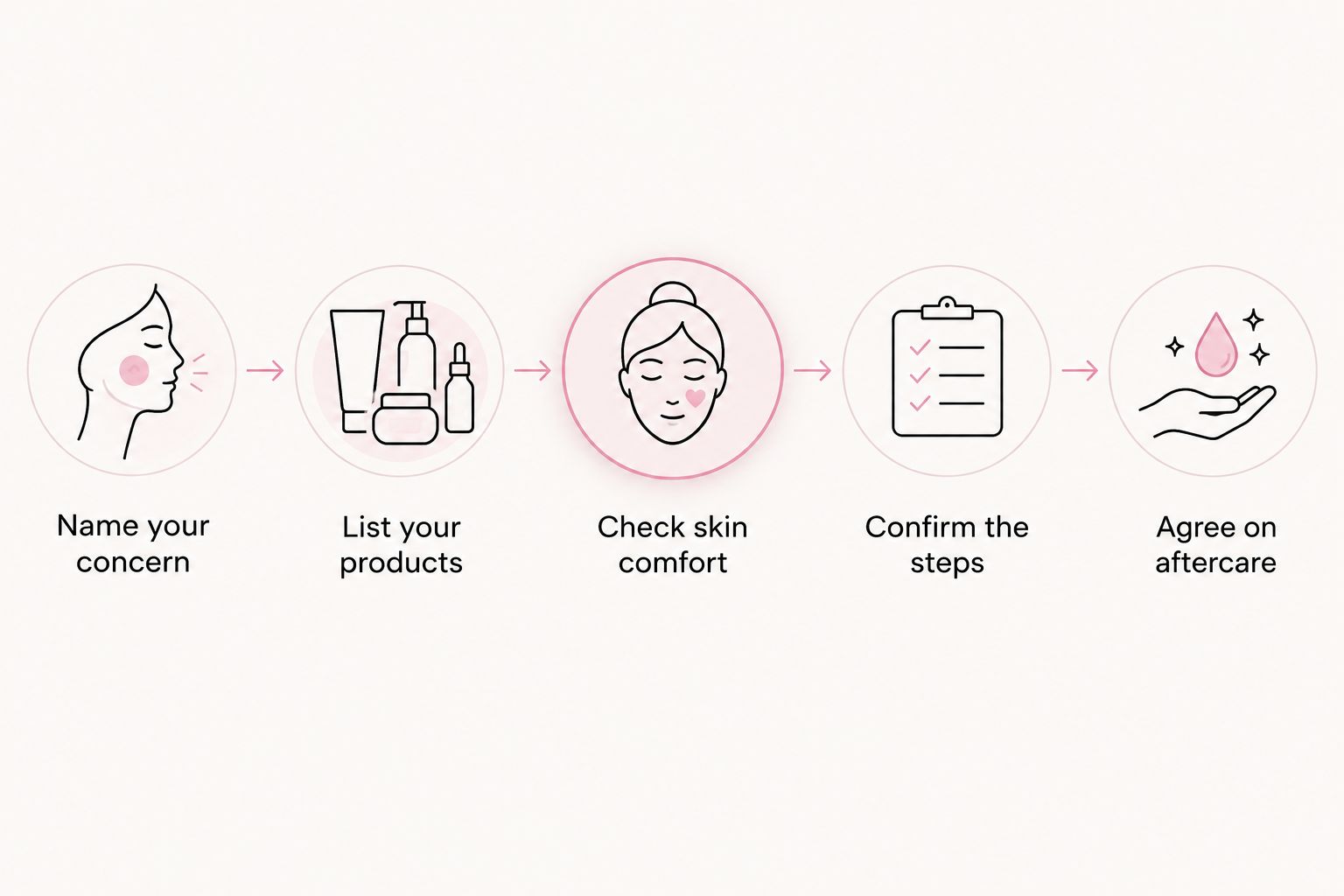
Bring the actual product names rather than saying you use something for acne. Do not stop a prescribed medication based on a general facial-preparation rule; ask the prescriber and treatment provider for instructions specific to you.
Sugar Me Softly is a local facial option for Salt Lake Valley clients who want to discuss their skincare goals in Murray. Ask which facial steps suit your acne routine before choosing the appointment.
Discuss your facial goals
Explore a Murray studio offering facials, then ask about compatibility with your skincare routine.
How we ranked these facial options
This 2026 ranking prioritizes a clear purpose, controlled intensity, medication compatibility, and realistic limits. Gentle care comes first because it avoids adding exfoliation by default; extraction and salicylic acid follow for more specific clogged-pore concerns.
Peels and LED sit lower because choosing them requires additional assessment or closer scrutiny of the treatment claim. This is a suitability guide, not proof that one facial produces better acne clearance than another. No facial earns a recommendation simply by including more steps.
Which facial should you choose?
Choose a gentle, non-exfoliating facial when comfort is your main concern. Choose selective extraction for suitable blackheads, and discuss salicylic acid when congestion is the priority and your skin tolerates exfoliation.
For your 2026 plan, keep acne treatment and cosmetic care separate but coordinated. If breakouts are deep, painful, persistent, or leaving scars, book a dermatologist assessment rather than escalating facial intensity. For local facial care, discuss your routine and goals with Sugar Me Softly before selecting a service.
FAQ
What's the best facial for acne-prone skin?
The best facial depends on your current concern: gentle care for irritation, selective extraction for suitable blackheads, or carefully chosen exfoliation for congestion. Facials support skincare but do not replace treatment for persistent acne.
Is a facial better than acne medication?
A facial is not a replacement for acne medication. Keep prescribed treatment decisions with your clinician and discuss compatibility before adding exfoliation or extraction.
Should I get extractions if I have painful acne?
Skip extraction of deep, painful acne bumps. Those lesions need medical assessment rather than pressure or squeezing during a facial.
Is salicylic acid good for acne-prone skin?
Salicylic acid is an established ingredient in over-the-counter acne treatment, particularly for clogged pores. A salicylic-acid facial still requires a review of your routine because extra exfoliation can irritate already sensitive skin.
Can a facial remove acne scars?
A standard facial does not remove established acne scars. Flat post-acne discoloration and depressed scars are different concerns, so ask a dermatologist which treatment matches the mark you want addressed.
Can I get a facial while using a retinoid?
Discuss retinoid use before booking any facial involving exfoliation or extraction. Do not change a prescribed regimen without instructions from your prescriber; treatment suitability depends on your skin and the planned procedure.
Does Sugar Me Softly offer facials in Murray?
Sugar Me Softly offers facials in Murray, Utah, for local clients in the Salt Lake Valley. Discuss your acne concerns, medications, and preferred treatment limits before choosing a service.
One last thing
A blackhead's dark color is not a sign that your face is dirty. The exposed material darkens at the pore opening; scrubbing harder is not the answer. Bring that distinction to your appointment: ask for appropriate care of clogged pores, not an aggressive attempt to scrub acne away.