Best overall for wax-free root removal: sugaring. Best for choosing hard or strip wax: waxing. Best budget option for at-home upkeep: shaving. This 2026 guide compares sugaring vs waxing vs shaving so you can choose a routine that fits your skin, schedule, and comfort.
- Sugaring wins for wax-free hair removal from the root, but it still involves discomfort and regrowth between appointments.
- Waxing suits people who prefer hard or strip wax; neither technique guarantees irritation-free skin.
- Shaving wins for at-home touch-ups without growing hair out, but smoothness ends sooner than with root removal.
- Sugar Me Softly offers professional sugaring hair removal for local clients in Murray and the Salt Lake Valley.
Why this matters
Choosing a hair-removal method means choosing its maintenance, too. Sugaring and waxing remove hair from the root; shaving cuts hair at the skin’s surface. That difference explains why root removal keeps skin smooth longer, while shaving lets you refresh an area without waiting for enough growth to grip.
Sugar Me Softly is best for Salt Lake Valley clients seeking professional sugaring hair removal in Murray. Sugar Me Softly offers Brazilian, leg, underarm, and brow sugaring, giving local clients an alternative to wax-based appointments.
None of these methods makes body hair a problem you have to solve. Choose removal where you want it, leave it where you like it, and judge the result by your own comfort—not somebody else’s idea of smooth.
What makes the best hair-removal method?
Use these criteria before picking your 2026 routine. A method that wins on smoothness can still lose on convenience.
- Removal depth: Sugaring and waxing pull hair from the root. Shaving leaves the root in place, so visible regrowth returns sooner.
- Skin comfort: All three methods can irritate skin. Technique, your skin’s condition, and the area being treated matter more than a blanket promise of gentleness.
- Upkeep: Root removal needs enough hair for the material to grip. Shaving does not require that grow-out period.
- Control: Shaving lets you stop, change the outline, or touch up at home. Professional sugaring and waxing put technique in a practitioner’s hands.
- Treatment area: Legs, underarms, brows, and intimate areas involve different contours and access. Choose the method and provider for the actual area, not just the category.
- Personal preference: Wax-free treatment, familiarity with waxing, and the privacy of home are valid reasons to choose different methods.
Sugaring, waxing, and shaving at a glance
This 2026 comparison ranks the methods by distinct uses—not by a claim that one suits every body.
| Method | Best for | Standout feature | Main advantages | Key limitation |
|---|---|---|---|---|
| Sugaring | Wax-free root removal | Sugar paste grips hair for removal from the root | Longer-lasting smoothness than shaving; no wax required | Requires sufficient regrowth; removal can hurt |
| Waxing | Choosing hard or strip wax | Different wax techniques suit different treatment preferences | Root removal; options for professional treatment | Skin irritation and heat-related risks require care |
| Shaving | At-home touch-ups | A razor cuts hair at the surface | Immediate control; no grow-out requirement | Shorter-lasting smoothness; cuts and razor irritation |
The practical split is simple: choose sugaring or waxing when root removal matters; choose shaving when immediate control matters. You do not need to use the same method everywhere.
1. Sugaring: best hair removal for wax-free root removal
Sugaring uses a sugar-based paste to remove hair from the root. In traditional hand-applied sugaring, the paste is applied against hair growth and removed in the direction of growth. Ask your practitioner how they work, because techniques differ.
The appeal is straightforward: you get root removal without wax. That does not make sugaring painless, suitable for every skin condition, or permanently hair-reducing. It is still a treatment that pulls hair out.
For local clients, Sugar Me Softly’s sugaring hair removal services include Brazilian, leg, underarm, and brow treatments. Choose the area you want treated, then discuss your skin history and previous hair-removal experiences before the appointment.
Sugaring pros
- Wax-free treatment: Sugaring gives you a root-removal option without using wax.
- Longer-lasting smoothness than shaving: Hair has to regrow after being removed from the root, rather than emerge from a freshly cut surface.
- Professional technique: An appointment lets a practitioner handle access, hair direction, and the treatment area.
- Different area choices: You can choose a small area or a larger treatment without committing to removing hair everywhere.
Sugaring cons
- Grow-out is part of the routine: Very short hair can be difficult to grip. Ask the practitioner what length they need rather than shaving immediately before a visit.
- Discomfort is real: Removing hair from the root can hurt, particularly in sensitive areas.
- Skin reactions remain possible: Redness, irritation, and ingrown hairs are not exclusive to waxing or shaving.
Best for: You want professional root removal and specifically prefer a wax-free method.
Verdict: Buy—choose a sugaring appointment when wax-free root removal is your priority. Start with 1 body area if you want to assess your comfort before planning a broader routine.
2. Waxing: best hair removal for choosing hard or strip wax
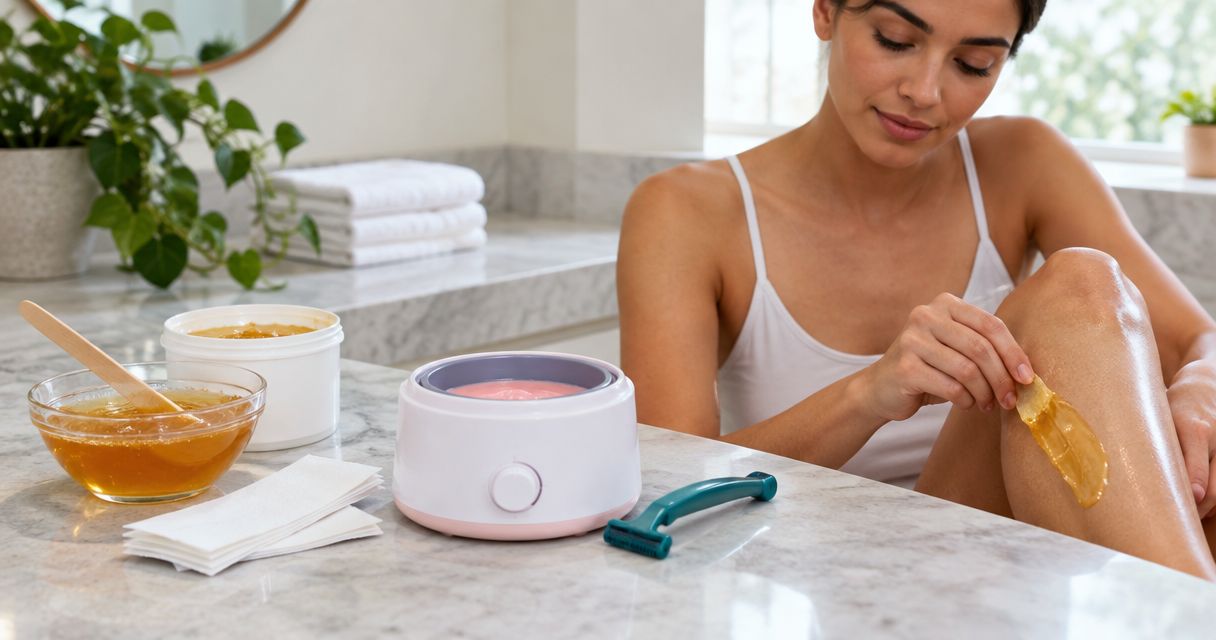
Waxing uses wax to grip hair and remove it from the root. Soft wax is generally removed with a strip; hard wax sets and is removed without a separate strip. Both approaches require appropriate technique and attention to skin condition.
Waxing earns its place when you prefer a familiar treatment or want a practitioner who offers a particular wax technique. It does not earn an automatic win over sugaring simply because you recognize it.
If your existing waxing routine leaves you comfortable and satisfied, switching is optional. If it repeatedly leaves your skin irritated, discuss the reaction before repeating the same treatment.
Waxing pros
- Root removal: Waxing keeps skin smooth longer than shaving because it removes the hair rather than cutting it at the surface.
- Technique choices: Hard wax and strip wax give you different treatment formats to discuss with a practitioner.
- Professional access: A practitioner can treat areas that are difficult to see or reach yourself.
- Familiarity: An established waxing routine gives you a reference point for discomfort, regrowth, and your skin’s response.
Waxing cons
- Skin injury is possible: Waxing can irritate or damage skin, particularly when skin is fragile or the technique is unsuitable.
- Heated wax needs care: Wax that is too hot can burn skin. Temperature is a safety issue, not a measure of treatment quality.
- Hair length matters: Wax cannot reliably grip hair that is too short, so shaving between appointments interrupts the routine.
Best for: You want root removal and prefer a specific hard-wax or strip-wax treatment.
Verdict: Hold—keep waxing if it already suits your skin and preferences; do not switch to it expecting guaranteed comfort. Ask which technique the practitioner plans to use and why it fits the treatment area.
3. Shaving: best hair removal for at-home touch-ups
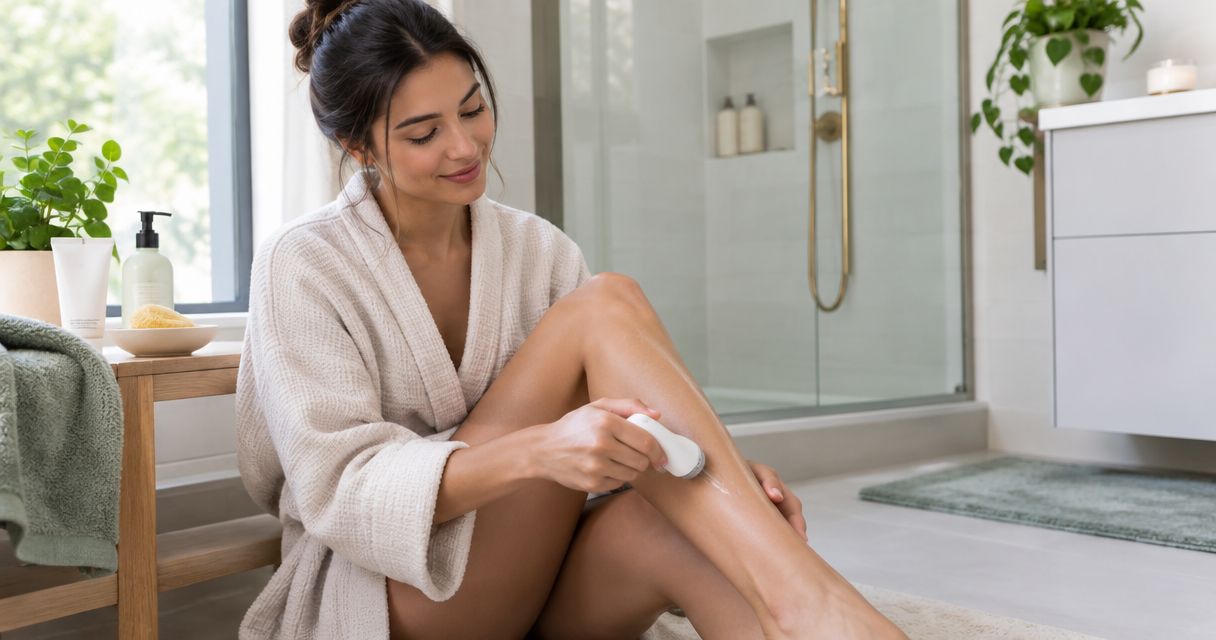
Shaving uses a razor to cut hair at or near the skin’s surface. It does not remove the root, which makes it useful when you want an immediate touch-up without waiting through a grow-out period.
You control the area, timing, and stopping point. The trade-off is repeat maintenance: stubble becomes noticeable sooner than after successful root removal.
Shaving also does not make hair grow back thicker. A cut hair has a blunt end that can feel coarser as it emerges, but cutting the shaft does not change the follicle’s growth characteristics.
Shaving pros
- No grow-out requirement: You do not need enough length for paste or wax to grip.
- At-home control: You choose the outline and stop whenever you want.
- Useful for touch-ups: Shaving fits a routine focused on immediate appearance rather than longer intervals of smoothness.
- Easy to vary by area: You can shave one area while leaving another untouched or using a different method there.
Shaving cons
- Shorter-lasting smoothness: The root remains, so regrowth becomes noticeable sooner than after root removal.
- Cuts and irritation: A razor can nick skin or cause razor burn, particularly with repeated passes or poor lubrication.
- Ingrown hairs remain possible: Close shaving can contribute to hairs growing back into the skin.
Best for: You want private, at-home upkeep and do not want to wait for hair to grow out.
Verdict: Buy—choose shaving for touch-ups and immediate control. Skip it just before a sugaring or waxing appointment, because removing the available length makes root removal harder.
How the methods rank
The 2026 ranking follows removal depth, comfort, upkeep, control, treatment area, and preference. Sugaring takes the default slot for wax-free root removal, waxing owns the choice of wax techniques, and shaving wins the at-home touch-up slot.
These are method-based recommendations, not results from a clinical trial. No ranking can predict exactly how your skin will respond. Your previous reactions, current skin condition, and the practitioner’s technique belong in the decision.
Which hair-removal method should you choose?
Choose sugaring if you want root removal without wax. It is the default recommendation for readers whose main goal is longer-lasting smoothness and whose preference is a wax-free appointment.
Choose waxing if a particular wax technique already works for you. A comfortable, familiar routine is a valid reason to stay with it. There is no requirement to change methods just because another option exists.
Choose shaving if you want control today. It suits touch-ups and people who dislike letting hair grow before an appointment. Accept the shorter smooth interval rather than expecting a razor to behave like root removal.
For your 2026 routine, decide by area instead of making a whole-body commitment. You can prefer sugaring for underarms, shaving for legs, and no removal elsewhere. What matters is that each choice solves the problem you actually have.
If recurring irritation is your main concern, pause the ranking. Persistent bumps, skin damage, or unexplained reactions need appropriate medical advice rather than another experiment with the same irritated area.
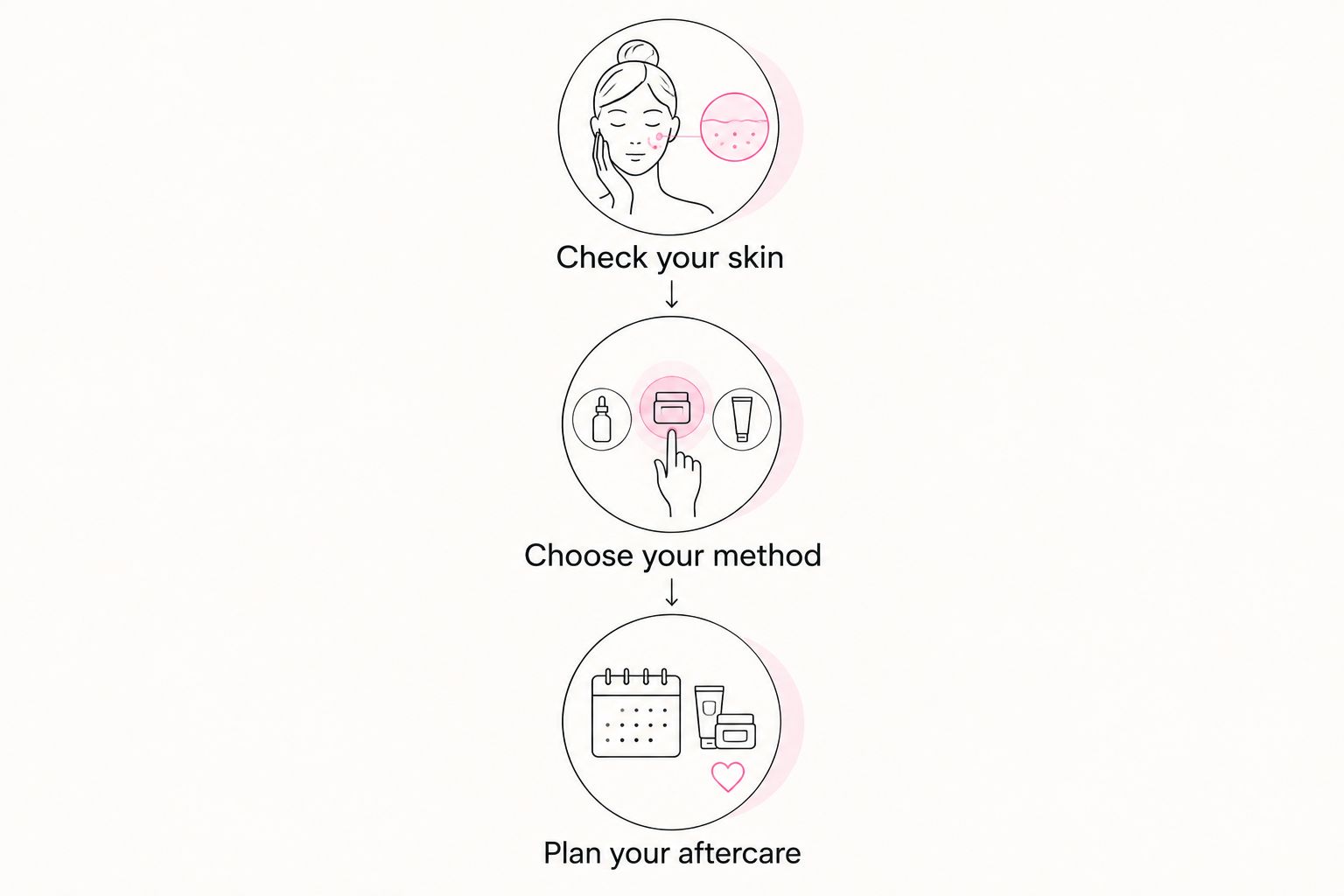
Before you remove hair: a simple preparation sequence
Check your skin
Do not treat sunburned, broken, or actively irritated skin. Tell a professional about topical retinoids, prescription acne treatments, recent skin procedures, and previous reactions before sugaring or waxing. Ask your prescriber when a medication creates uncertainty about hair removal.
Choose your method
For waxing, the American Academy of Dermatology’s public hair-removal guidance recommends hair approximately 1/4 inch to 3/4 inch long. That is waxing guidance, not a promise that every sugaring technique uses the same requirement. Ask your sugaring practitioner for their preparation instructions.
For shaving, soften the hair and skin, use a shaving lubricant, and shave in the direction of growth. Avoid repeatedly scraping the same patch to chase perfect smoothness.
Plan your aftercare
Follow the practitioner’s instructions after root removal. If an area feels tender, avoid adding friction or harsh exfoliation to it. After shaving, rinse gently and use a moisturizer your skin tolerates.
Preparation is also the moment to state your boundaries. Tell the practitioner which areas you want treated, which areas you want left alone, and whether you need a pause. Clear communication is part of a comfortable appointment—not an inconvenience.
Explore your sugaring options
Review Sugar Me Softly’s sugaring services for Murray and Salt Lake Valley clients.
FAQ
What’s best in sugaring vs waxing vs shaving?
Sugaring is the best fit for wax-free root removal, waxing suits people who prefer a particular wax technique, and shaving suits at-home touch-ups. Choose by your desired maintenance routine and skin response rather than expecting one method to win everywhere.
Is sugaring less painful than waxing?
Sugaring is not guaranteed to hurt less than waxing. Both remove hair from the root, and discomfort depends on the area, technique, and your individual response.
Does sugaring last longer than shaving?
Sugaring generally keeps skin smooth longer than shaving because it removes hair from the root. Shaving cuts the hair at the surface, leaving the root in place.
Does shaving make hair grow back thicker?
Shaving does not make hair grow back thicker. The blunt end of a cut hair can feel coarser as it emerges, but shaving does not change the follicle’s growth characteristics.
Can I shave between sugaring appointments?
Shaving between sugaring appointments removes the length needed for the paste to grip. If you shave, tell your practitioner and confirm when the hair will be ready for treatment.
Which method prevents ingrown hairs?
None of these methods guarantees prevention of ingrown hairs. Sugaring, waxing, and shaving can all be followed by ingrown hairs; recurring or inflamed bumps deserve medical advice.
Can I get sugaring if I use a retinoid?
Discuss retinoid use with your prescriber and practitioner before sugaring. Retinoids can affect skin sensitivity and fragility, so do not assume that a wax-free treatment removes the concern.
Where can I find professional sugaring in Murray, Utah?
Sugar Me Softly offers professional sugaring in Murray for local Salt Lake Valley clients. Its services include Brazilian, leg, underarm, and brow sugaring.
One last thing
Judge the whole routine, not just how your skin feels immediately afterward. Notice whether you tolerate the grow-out, whether upkeep fits your schedule, and whether the treated area stays comfortable.
For a 2026 reset, ask yourself two questions: do you want root removal, and do you want wax involved? Those answers separate the methods more clearly than a vague promise of the smoothest skin. You can change your mind, change methods by area, or leave your hair alone.