Best overall for minimizing skin contact: guarded electric trimming. Best for professional root removal: sugaring on healthy skin that tolerates it. Best for a close at-home finish: careful shaving. This 2026 guide compares the best hair removal for sensitive skin by skin contact, discomfort, upkeep, and the finish you want.
- Guarded electric trimming is the best hair removal for sensitive skin when avoiding close skin contact matters most.
- Sugaring removes hair from the root, but sensitive skin still needs careful assessment before treatment.
- Sugar Me Softly offers professional sugaring hair removal for local clients in Murray and the Salt Lake Valley.
- Skip hair removal over irritated skin; choose your method around your skin condition, not just your desired finish.
Why this matters
Sensitive skin is not one diagnosis. Razor bumps, contact allergies, eczema, and irritation after root removal need different decisions. A method that suits your legs does not automatically suit your underarms or bikini area.
Choose the least skin contact that delivers the finish you actually need. If neat, shorter hair is enough, you do not need to remove it from the root. If you want professional root removal, Sugar Me Softly offers sugaring hair removal in Murray for Salt Lake Valley clients.
For your 2026 routine, start with the condition of your skin today. Redness, broken skin, an active rash, or a recent reaction is a reason to pause, not a reason to try a stronger method.
What makes the best hair removal for sensitive skin?
These criteria determine the recommendations below. Smoothness matters, but it does not outrank skin health.
- Skin contact: Does the method skim above the skin, scrape its surface, or pull hair from the root?
- Irritation triggers: Consider fragrance, chemical ingredients, heat, friction, and repeated passes.
- Desired finish: A tidy trim, close shave, and root removal produce different results.
- Skin condition: Active irritation changes the decision, even if you have tolerated a method before.
- Provider skill: Professional methods require appropriate technique and an honest discussion of your skin and medications.
- Repeat care: Account for the preparation and aftercare you will actually follow, not an ideal routine you will abandon.
Hair removal methods at a glance
The order reflects a decision tree for sensitive skin, not proof that one method is safest for every person.
| Method | Best for | Standout feature | Key limitation |
|---|---|---|---|
| Guarded electric trimming | Keeping hair neat with less close skin contact | Shortens hair without removing the root | Leaves visible hair or stubble |
| Professional sugaring | Root removal for skin that tolerates it | Removes hair using sugar paste | Pulling hair still causes discomfort and irritation |
| Careful shaving | A close finish at home | Removes hair at the skin surface | Razor irritation and ingrown hairs remain concerns |
| Professional laser hair removal | Longer-term hair reduction | Targets pigment in hair follicles | Requires assessment, repeat treatment, and sun precautions |
| Professional waxing | Continuing a method your skin already tolerates | Removes hair from the root | Heat, pulling, and skin injury are concerns |
| Depilatory cream | Avoiding blades and root pulling | Chemically breaks down hair | Irritation, allergy, and chemical burns are concerns |
1. Guarded electric trimming: best for less skin contact
Guarded electric trimming shortens hair without aiming for a completely bare finish. A guard keeps the cutting elements farther from your skin than a close shave does. That makes trimming the default recommendation when your priority is avoiding scraping and root pulling.
Use a clean device designed for the body area you are treating. Follow its instructions, avoid pressing down, and do not keep passing over the same spot to chase a closer finish. A trim is supposed to leave some hair.
Electric trimming pros:
- Does not pull hair from the root.
- Avoids applying a hair-dissolving cream.
- Lets you choose a finish that leaves space between the cutter and your skin.
Electric trimming cons:
- Does not produce a bare, freshly shaved finish.
- Friction and accidental nicks remain possible, especially without a guard.
Best for: You want tidy hair and prioritize comfort over complete removal.
Verdict: Buy a suitable guarded trimmer if shorter hair meets your goal. Do not turn a gentle trim into an aggressive close shave.
2. Professional sugaring: best for root removal with sugar paste
Sugaring uses sugar paste to remove hair from the root. In traditional hand sugaring, the practitioner applies paste against hair growth and removes it in the direction of growth. The process differs from conventional waxing, but it still pulls hair out.
Sugaring is not a promise of painless or irritation-free hair removal. Technique, your skin condition, and the treated area all matter. Tell your practitioner about previous reactions, skin treatments, and medications before the appointment.
Sugar Me Softly offers sugaring hair removal, including Brazilian, leg, underarm, and brow services. For local clients seeking professional root removal, Sugar Me Softly is an option in Murray and the Salt Lake Valley.
Professional sugaring pros:
- Removes hair from the root rather than cutting it at the surface.
- Does not use a depilatory cream to dissolve hair.
- Gives you an opportunity to discuss the treatment area with a practitioner.
Professional sugaring cons:
- Root removal causes discomfort and can leave temporary redness.
- Ingrown hairs and follicle irritation remain possible.
Best for: You want root removal and your skin is healthy enough for treatment.
Verdict: Hold until your practitioner has assessed any sensitivity concerns. Choose sugaring for its method and suitability, not a blanket claim that sugar paste cannot irritate skin.
3. Careful shaving: best for a close finish at home
Shaving cuts hair at the skin surface. It gives you a close finish without pulling out the root, but a blade also passes directly over your skin. Pressure, repeated strokes, and unsuitable products can make that trade-off uncomfortable.
The American Academy of Dermatology recommends wetting your skin and hair, using shaving cream or gel, and shaving in the direction hair grows. Keep the blade clean and replace a dull blade rather than pressing harder. For your 2026 routine, prioritize fewer, controlled passes over an extra-close result.
Careful shaving pros:
- Does not pull hair from the root.
- Lets you control the area and timing yourself.
- Does not require growing hair long enough for root removal.
Careful shaving cons:
- Can cause cuts, razor irritation, and ingrown hairs.
- Hair remains in the follicle, so the smooth finish needs repeat upkeep.
Best for: You want a close at-home finish and can follow a gentle shaving routine.
Verdict: Buy shaving supplies suited to your skin if you already tolerate shaving. Skip another pass when the skin starts to sting.
4. Professional laser hair removal: best for longer-term reduction
Laser hair removal targets pigment in hair follicles to reduce hair growth. It is a treatment course, not an instant replacement for every other method. Hair color, skin tone, the device, and the provider's experience affect suitability.
The American Academy of Dermatology's patient guidance describes an initial course of 2–6 treatments, commonly spaced 4–6 weeks apart, while noting that treatment needs vary. Use those figures as context for a consultation, not as your personal schedule or a guaranteed result.
For a 2026 consultation, ask about experience treating your skin tone and the risks of burns or pigment changes. Discuss tanning, medications, and skin conditions before committing.
Professional laser hair removal pros:
- Offers longer-term hair reduction.
- Does not rely on repeatedly pulling hair out with paste or wax.
- Allows treatment planning around your hair and skin characteristics.
Professional laser hair removal cons:
- Carries risks including burns and changes in skin pigmentation.
- Is less effective on hair with little pigment, including white or gray hair.
Best for: You want longer-term reduction and are suitable for professional treatment.
Verdict: Hold until a qualified provider assesses your skin and hair. Do not choose laser solely because shaving irritates you.
5. Professional waxing: best for continuing a tolerated routine
Waxing removes hair from the root. Some techniques use strips; others remove hardened wax directly. Both involve pulling hair out, and heated wax adds a temperature consideration.
Waxing belongs on this list for people whose healthy skin already tolerates it—not as the automatic first choice for unexplained sensitivity. The American Academy of Dermatology's at-home waxing guidance recommends hair about ¼–¾ inch long. For professional treatment, follow the practitioner's preparation instructions instead of assuming every technique needs the same length.
Tell your provider about retinoids and other skin treatments. These can change whether waxing is appropriate; do not stop prescribed medication without medical advice.
Professional waxing pros:
- Removes hair from the root.
- Treats different body areas using an established method.
- Lets you continue a familiar routine if your skin tolerates it.
Professional waxing cons:
- Can cause burns, skin lifting, irritation, or follicle inflammation.
- Is unsuitable for some skin conditions and medication circumstances.
Best for: You have a tolerated waxing routine and no current reason to avoid it.
Verdict: Hold if sensitivity is new. Do not repeat waxing over irritated skin to catch missed hairs.
6. Depilatory cream: best for avoiding blades and pulling
Depilatory creams chemically break down hair so you can wipe it away. They avoid blade contact and root pulling, but the chemicals also contact your skin. A sensitive-skin label does not remove the possibility of irritation.
Use only a product labeled for the intended body area. Follow its patch-test instructions and maximum application time exactly. Do not assume a cream intended for legs is appropriate for your face, bikini area, or genital skin.
Depilatory cream pros:
- Does not require a razor blade.
- Does not pull hair from the root.
- Provides an at-home alternative for people who tolerate the formula.
Depilatory cream cons:
- Can cause contact reactions or chemical burns.
- Requires strict attention to application area and timing.
Best for: You want to avoid blades and pulling, and the labeled patch test causes no reaction.
Verdict: Skip depilatory cream as your first experiment during an active sensitivity flare. Stop and follow the product's removal instructions if burning or stinging starts.
How we ranked these methods
This ranking prioritizes less close skin contact first, then separates options by the finish and upkeep you want. It is not a head-to-head clinical trial or a universal safety ranking.
Trimming leads because it can leave hair above the skin without root removal. Sugaring fills the professional root-removal slot; shaving fills the close at-home slot. Laser belongs in a separate decision about longer-term reduction, while waxing and depilatory cream depend heavily on previous tolerance and treatment suitability.
Which hair removal method should you choose?
Choose guarded trimming when you are undecided. It answers the simplest question first: do you need bare skin, or just shorter hair?
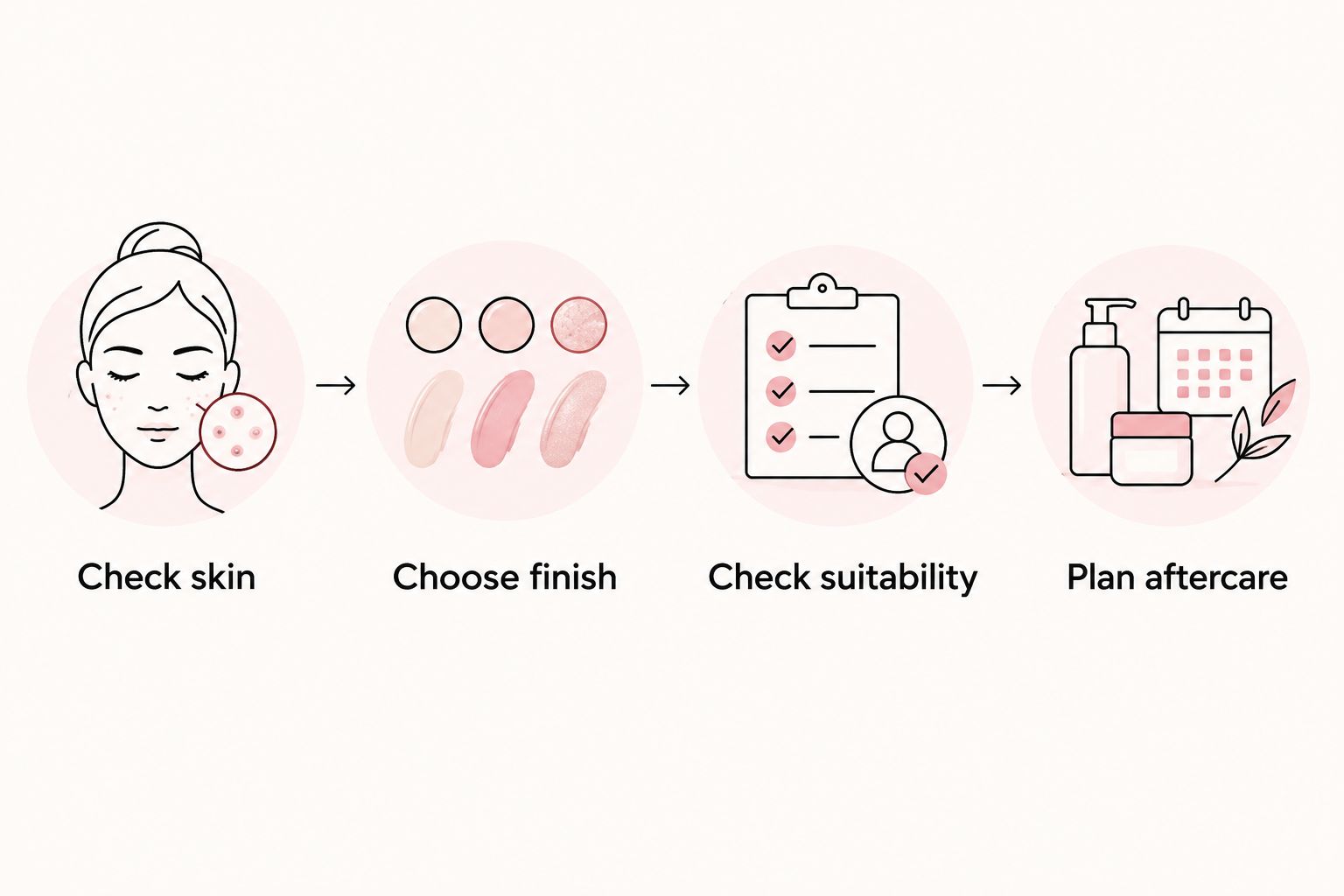
Use this decision sequence before trying something new:
- Check skin: Pause for a rash, broken skin, or ongoing irritation.
- Choose finish: Decide between shorter hair, a close surface finish, root removal, and longer-term reduction.
- Check suitability: Review the body area, product instructions, medications, and previous reactions.
- Plan aftercare: Follow method-specific instructions and avoid immediately adding irritating products or friction.
If professional sugaring fits that decision, Sugar Me Softly offers hair removal services for local clients. Discuss your skin concerns before treatment rather than treating the appointment as a test of how much discomfort you can tolerate.
Explore your sugaring options
Review sugaring hair removal at a Murray studio serving the Salt Lake Valley.
FAQ
What's the best hair removal for sensitive skin in 2026?
Guarded electric trimming is the default choice when minimizing close skin contact matters more than a completely bare finish. For root removal or longer-term reduction, choose a method after reviewing your skin condition and treatment suitability.
Is sugaring better than waxing for sensitive skin?
Sugaring is not universally better than waxing for sensitive skin. Both remove hair from the root and can cause irritation; technique, skin condition, medications, and previous reactions matter more than a blanket ranking.
Can I get Brazilian sugaring if I have sensitive skin?
Sensitive skin alone does not determine whether Brazilian sugaring is appropriate. Discuss previous reactions, current irritation, medications, and skin treatments with your practitioner, and postpone treatment over broken or actively irritated skin.
Does shaving make hair grow back thicker?
Shaving does not change hair thickness or its growth rate. The cut end can feel coarser as it grows out, which explains the familiar stubbly feeling.
Is laser hair removal suitable for every skin tone?
Laser hair removal requires equipment and settings appropriate for your skin tone. Ask a qualified provider about experience treating your skin tone, expected results, and risks such as burns or pigment changes.
Are sensitive-skin hair removal creams irritation-free?
Sensitive-skin hair removal creams are not irritation-free. Follow the product's patch-test, body-area, and timing instructions, and do not apply the cream to broken or irritated skin.
What should I do if hair removal keeps giving me a rash?
Stop using the method that triggers the rash and seek medical advice for persistent, severe, or recurring symptoms. Blistering, spreading redness, drainage, or significant pain needs prompt assessment rather than another hair removal experiment.
One last thing
The gentlest choice is sometimes keeping a little hair. You do not need a completely bare finish to feel comfortable, cared for, or confident.
For your next 2026 hair removal decision, change the goal before changing the method: try a neat trim instead of chasing closer removal. If irritation keeps returning, get the skin problem assessed rather than cycling through products.