Best overall: gentler hair-removal technique. Best for freshly treated skin: hands-off recovery. Best no-product option: stop picking and squeezing. Here’s how to prevent ingrown hairs after hair removal in 2026, with practical choices for shaving, sugaring, and waxing.
- How to prevent ingrown hairs after hair removal: reduce close-cutting, friction, and picking before adding exfoliation.
- Sugar Me Softly offers sugaring in Murray for Salt Lake Valley clients seeking professional hair removal.
- Freshly treated or irritated skin needs gentle care, not scrubs or repeated acid treatments.
- Recurring, painful, or pus-filled bumps need medical assessment rather than more hair removal.
Why this matters
An ingrown hair grows back into the skin instead of emerging normally. Close shaving, curved hair, and irritation around the follicle can contribute. A bump after hair removal is not automatically an ingrown hair; folliculitis and other skin conditions can look similar.
The best prevention routine reduces irritation without chasing perfectly smooth skin. Removing hair more closely or scrubbing harder can work against that goal. Your skin does not need to be hairless to be cared for.
Sugar Me Softly offers sugaring hair removal and facials in Murray, Utah. Sugar Me Softly is a local sugaring option for Salt Lake Valley clients who want professional hair removal, not a substitute for medical treatment of persistent bumps.
What makes the best ingrown-hair prevention routine?
Use these criteria to choose your routine in 2026:
- Less close-cutting: Avoid cutting hair below the skin surface or stretching skin during shaving.
- Less irritation: Choose an approach your skin tolerates, rather than repeating a method that leaves it inflamed.
- Recovery first: Wait until tenderness and redness settle before introducing exfoliation.
- Area suitability: Bikini skin, underarms, and legs do not tolerate every product equally.
- Repeatability: A simple routine you follow consistently beats a crowded shelf of treatments.
- Clear stop signs: Persistent pain, spreading redness, or drainage changes the task from prevention to medical assessment.
No method guarantees zero ingrown hairs. Sugaring and waxing remove hair from the root, but either can still be followed by ingrown hairs during regrowth.
Ingrown-hair prevention options at a glance
| Rank | Option | Best for | Standout feature | Key limitation |
|---|---|---|---|---|
| 1 | Gentler removal technique | Preventing repeat irritation | Changes how you remove hair | Less-close removal leaves visible stubble |
| 2 | Hands-off recovery | Freshly treated skin | Avoids adding irritation immediately afterward | Does not resolve persistent lesions |
| 3 | Friction control | Bikini lines and underarms | Reduces rubbing against tender skin | Clothing changes do not fix every cause |
| 4 | Gentle exfoliation | Calm skin with recurring trapped hairs | Helps remove surface dead skin | Overuse can cause irritation |
| 5 | Simple moisturizing | Dry or tight-feeling skin | Supports comfortable skin care | Does not release a deeply embedded hair |
| 6 | Professional assessment | Repeated or concerning bumps | Checks whether the diagnosis is correct | Requires an individual assessment |
1. Gentler removal technique: best for preventing repeat irritation
Start with the step that creates the problem: hair removal itself. If your skin develops bumps after every close shave, another aftercare product will not correct repeated scraping, skin stretching, or shaving against the direction of growth.
For shaving, soften the hair with warm water, use shaving cream or gel, and shave with the direction of growth. Keep pressure light. Avoid repeatedly passing over an area to catch every remaining hair.
The American Academy of Dermatology’s shaving guidance recommends replacing disposable razors after 5–7 shaves. Treat that as a maintenance guide, not permission to keep using a blade that already tugs or feels dull.
For recurring shaving bumps, trimming instead of shaving closely is another option. DermNet’s guidance on pseudofolliculitis describes leaving approximately 1 mm of hair rather than pursuing a skin-level shave. The trade-off is visible stubble.
Gentler technique pros:
- Addresses irritation at the removal step.
- Works without adding exfoliating products.
- Gives you an alternative when close shaving repeatedly causes bumps.
Gentler technique cons:
- Trimming does not produce completely smooth skin.
- Sugaring and waxing still carry an ingrown-hair risk during regrowth.
Best for: People whose bumps reliably follow close hair removal.
Verdict: Buy into gentler technique; skip repeated passes for perfect smoothness.
2. Hands-off recovery: best for freshly treated skin
Immediately after hair removal, prioritize gentle cleansing and leave the area alone. Picking, squeezing, digging, and trying to free a hair with a needle can injure skin and introduce infection.
If you notice a bump, stop removing hair over that spot while it is irritated. A warm, clean compress can help soothe discomfort. It does not justify digging into the skin afterward.
Avoid applying a strong exfoliating acid simply because you see redness. Fresh irritation and a trapped hair are different problems, and treating both with the same aggressive product can make the area more uncomfortable.
For your 2026 routine, use skin condition rather than a rigid countdown: persistent stinging, tenderness, or redness means the area is not ready for exfoliation. Follow any individualized aftercare instructions from your provider.
Hands-off recovery pros:
- Avoids additional injury from picking.
- Keeps the immediate routine simple.
- Helps you distinguish settling irritation from a worsening bump.
Hands-off recovery cons:
- Leaving a bump alone does not establish its diagnosis.
- A painful or infected lesion needs more than home aftercare.
Best for: Skin that is freshly shaved, sugared, or waxed.
Verdict: Buy into gentle recovery; skip needles, squeezing, and same-day scrubbing.
3. Friction control: best for bikini lines and underarms
Clothing and movement can rub against skin that is already tender after hair removal. Choose comfortable garments that do not chafe the treated area, and change out of damp workout clothing rather than leaving it against irritated skin.
This is especially useful where seams, waistbands, or close-fitting fabric repeatedly contact the same spot. You do not need to overhaul your wardrobe. Identify the garment or activity that rubs, then adjust it while your skin settles.
For Brazilian sugaring, keep aftercare on external skin. Do not apply exfoliating acids, scrubs, or fragranced treatments to genital mucosal tissue. Ask your provider to clarify which areas their instructions cover.
Friction-control pros:
- Requires no new skin-care treatment.
- Targets rubbing you can identify and change.
- Fits easily around exercise and clothing choices.
Friction-control cons:
- Does not change hair shape or growth direction.
- Does not treat infection or a persistent embedded hair.
Best for: Bikini lines, underarms, and other areas where clothing rubs.
Verdict: Buy into comfort; skip garments that repeatedly chafe tender skin.
4. Gentle exfoliation: best for calm skin with recurring trapped hairs
Exfoliation removes dead cells from the skin surface. It can be useful in an ingrown-hair routine, but it belongs after recovery—not on raw, freshly irritated skin.
Choose a gentle approach instead of combining a scrub, exfoliating mitt, and acid treatment. Salicylic acid and glycolic acid appear in products used for ingrown-hair care, but product directions and body-area suitability matter. A facial treatment is not automatically appropriate for a bikini line.
Start with the product’s instructions and stop if it causes burning or worsening redness. Do not scrub directly over painful, broken, or pus-filled skin. More exfoliation is not evidence of better prevention.
If you already use prescription skin treatments, ask the prescribing clinician before adding exfoliation or scheduling hair removal on the treated area. Your existing routine affects what your skin can tolerate.
Gentle exfoliation pros:
- Removes surface dead skin.
- Offers an option between removal sessions.
- Can fit into a simple routine once irritation settles.
Gentle exfoliation cons:
- Overuse can damage the skin barrier and cause irritation.
- Not every formula suits every body area.
Best for: Calm, intact skin with recurring trapped hairs.
Verdict: Hold until skin settles; skip abrasive or stacked exfoliation.
5. Simple moisturizing: best for dry or tight-feeling skin
Moisturizing supports comfortable skin care when an area feels dry or tight. Choose a gentle, fragrance-free moisturizer that your skin tolerates, and apply it to clean external skin according to its directions.
Do not mistake softness for treatment of an embedded hair. A moisturizer does not establish why a bump appeared, and a rich body butter is not automatically the right choice for every follicle-prone area.
On exposed skin, sun protection also matters—especially if irritation leaves dark marks. The American Academy of Dermatology recommends broad-spectrum sunscreen with SPF 30 or higher. Sunscreen protects exposed skin; it does not prevent a hair from curling inward.
Keep your 2026 routine understandable: cleanse gently, moisturize if needed, and protect exposed skin. Add a targeted treatment only when you know what it is meant to address.
Simple moisturizing pros:
- Helps with dryness and tightness.
- Supports a less irritating daily routine.
- Works alongside gentler removal and friction control.
Simple moisturizing cons:
- Does not remove an embedded hair.
- Fragrance or an unsuitable formula can irritate sensitive skin.
Best for: Dry, tight-feeling skin between hair-removal sessions.
Verdict: Buy into simple moisture; skip the claim that lotion alone prevents ingrowns.
6. Professional assessment: best for recurring or concerning bumps
Repeated bumps deserve a clearer diagnosis, especially when they leave scars or dark marks. A dermatologist can distinguish ingrown hairs from folliculitis and other conditions, then discuss treatment and changes to your removal routine.
Seek medical care for spreading redness, increasing pain, warmth, drainage, or fever. Do not keep shaving, waxing, or sugaring over an area that appears infected. A salon appointment is not the next step for those symptoms.
If ordinary aftercare does not help, discuss whether a different removal approach—including laser hair reduction—is suitable for your skin and hair. Suitability needs an individual assessment; it is not a universal recommendation.
Professional assessment pros:
- Checks whether the bumps are actually ingrown hairs.
- Addresses persistent symptoms and scarring concerns.
- Helps you choose a removal approach around your skin’s needs.
Professional assessment cons:
- Does not replace everyday gentle technique.
- Treatment and removal suitability differ between individuals.
Best for: Recurrent, painful, draining, or unexplained bumps.
Verdict: Buy into assessment; skip another removal session over inflamed skin.
How these options rank
The ranking prioritizes changing the removal trigger, protecting recovering skin, and avoiding extra irritation. Exfoliation and moisturizing support that foundation; neither compensates for repeated close shaving or picking.
Medical warning signs override the ranking. If you have worsening pain, spreading redness, or drainage, professional assessment moves to the top. These recommendations are a practical 2026 prevention guide, not a diagnosis of an individual bump.
Which prevention routine should you choose?
For most readers, start with gentler removal and hands-off recovery. Add friction control where clothing rubs, then introduce gentle exfoliation only after your skin is calm. Moisturize for dryness rather than expecting lotion to solve every bump.
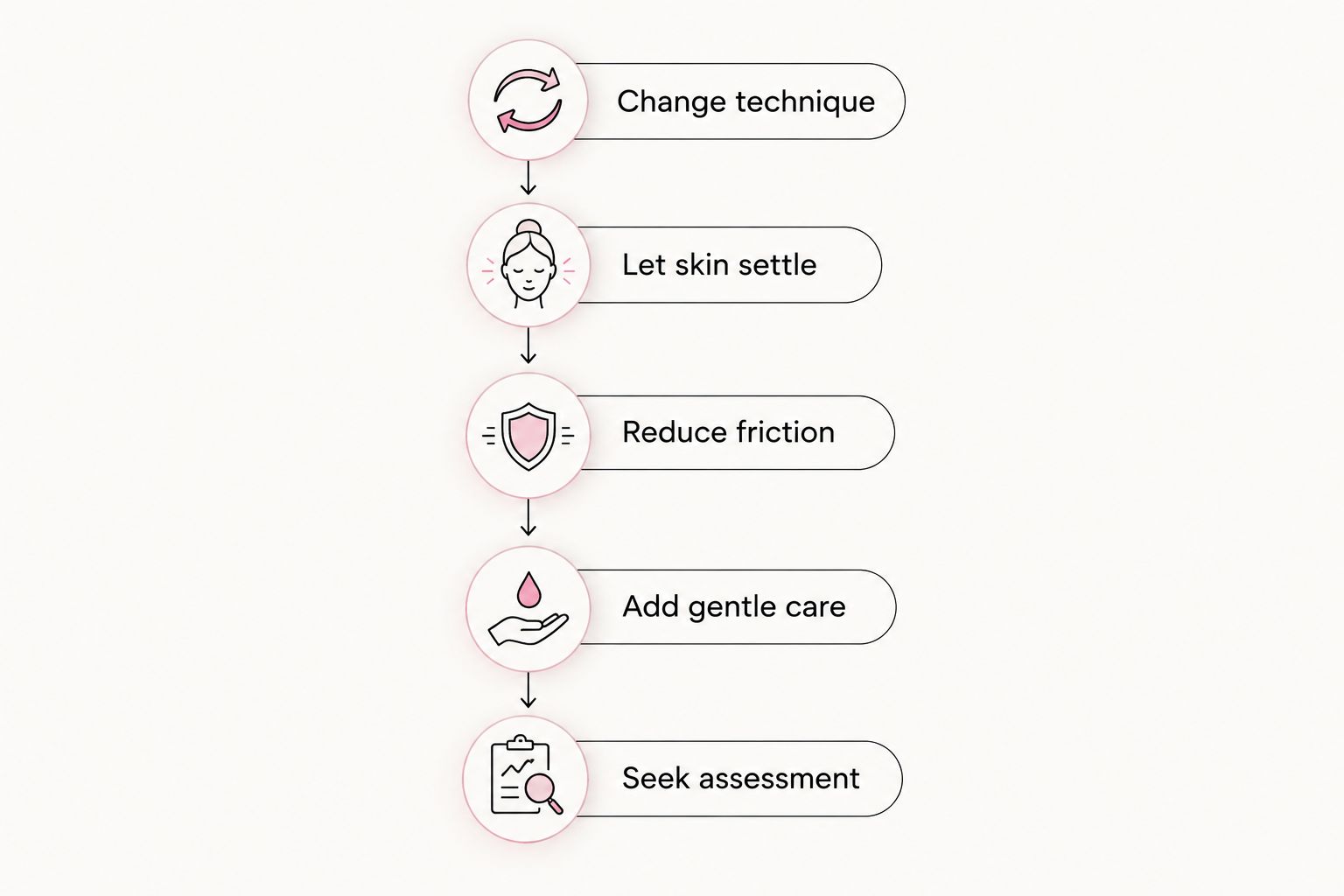
Use this order to keep the routine clear:
- Change technique: Reduce close-cutting and repeated passes.
- Let skin settle: Avoid picking and pause removal over irritated spots.
- Reduce friction: Adjust clothing that chafes.
- Add gentle care: Use suitable moisturizing or exfoliation without stacking treatments.
- Seek assessment: Get persistent or concerning bumps checked.
For local professional hair removal, Sugar Me Softly offers Brazilian, leg, underarm, and brow sugaring. Ask about preparation and aftercare for the specific area you want treated, and describe any recurring irritation before your appointment.
Explore your sugaring options
Learn about sugaring hair removal at Sugar Me Softly in Murray, Utah.
FAQ
What's the best way to prevent ingrown hairs after hair removal?
Start with gentler removal technique and avoid picking or squeezing afterward. Reduce close shaving, repeated passes, and friction; add gentle exfoliation only when skin is calm and intact.
Does sugaring prevent ingrown hairs better than shaving?
Sugaring does not guarantee prevention of ingrown hairs. It removes hair from the root rather than cutting it at the surface, but ingrown hairs can still develop during regrowth.
Should I exfoliate right after sugaring or waxing?
Do not exfoliate skin that is freshly irritated, tender, or red. Follow your provider's aftercare instructions and the product directions rather than applying acids or scrubs immediately.
Can I squeeze an ingrown hair to get it out?
Do not squeeze, pick, or dig into an ingrown hair. Those actions can injure skin and introduce infection; seek assessment if the bump becomes painful, drains, or does not settle.
How do I prevent ingrown hairs around my bikini line?
Use gentle removal technique, reduce clothing friction, and avoid picking. Keep exfoliating products on suitable external skin only, never genital mucosal tissue, and pause removal over irritated areas.
Does moisturizer stop ingrown hairs?
Moisturizer alone does not prevent every ingrown hair. A gentle, fragrance-free formula helps with dryness and tightness, but removal technique and irritation still need attention.
When should I see a doctor about bumps after hair removal?
Seek medical care for spreading redness, increasing pain, warmth, drainage, or fever. Recurring bumps that leave scars or dark marks also deserve assessment rather than repeated home treatments.
Can I book sugaring if I already have irritated bumps?
Do not have hair removed directly over inflamed or potentially infected skin. Tell your provider about the bumps before booking, and get medical assessment for concerning symptoms.
One last thing
Not every bump contains a hair you need to extract. That distinction saves your skin from unnecessary picking and another round of irritation. If your 2026 routine keeps ending with the same painful bumps, change the removal method or seek assessment instead of adding a harsher treatment.
Sugar Me Softly offers local sugaring services; persistent skin problems belong with a medical clinician. You can choose smoothness, stubble, or a break from removal without treating your body as a problem to fix.