Best overall: tweezing for precise shape control. Best for fine fuzz: threading. Best for a conservative tidy-up: trimming. This 2026 guide compares the best eyebrow shaping method for different goals, including brow sugaring at Sugar Me Softly in Murray, Utah.
- Tweezing is the best eyebrow shaping method for controlling exactly which hairs you remove.
- Threading suits fine-fuzz cleanup; trimming preserves density without removing hairs from the root.
- Sugar Me Softly offers brow sugaring for Salt Lake Valley clients seeking professional eyebrow shaping.
- Choose brow shaping by precision, skin condition, and desired fullness—not promises of painless removal.
Why this matters
Eyebrow shaping involves two separate decisions: which outline suits your preferences, and how to remove or shorten the hairs outside it. A method that clears fine fuzz efficiently is not necessarily the method that gives you the most control over a sparse tail.
Choose the outline before choosing the removal technique. Otherwise, an efficient cleanup can efficiently remove hair you wanted to keep. You do not need thinner brows to have tidy brows, and your two eyebrows do not need to be identical.
This 2026 comparison ranks methods by their practical uses rather than treating every brow as the same starting point. Your skin condition, existing fullness, and comfort with maintenance belong in the decision.
What makes the best eyebrow shaping method?
Use these criteria to judge a technique before committing to it:
- Precision: Can you select an individual hair, or does the method clear a larger patch at once?
- Density preservation: Can you tidy the outline without thinning the body of the brow?
- Skin contact: Does the technique use adhesive, friction, or repeated handling around the brow?
- Hair coverage: Does it suit isolated coarse hairs, fine fuzz, or long hairs that need shortening?
- Maintenance control: Can you safely manage small touch-ups yourself, or do you prefer professional shaping?
- Operator skill: Can the person doing the shaping explain what stays, what goes, and where removal stops?
Pain tolerance matters, but it is not a reliable ranking system. Root-removal methods involve pulling hairs out; describing any of them as universally painless sets the wrong expectation.
Eyebrow shaping methods at a glance
| Rank and method | Best for | Standout feature | Key limitation |
|---|---|---|---|
| 1. Tweezing | Precise shaping and sparse brows | Selects individual hairs | Slow for clearing broad areas of fine fuzz |
| 2. Threading | Fine-fuzz cleanup | Removes hairs with twisted thread | Pulling and friction can irritate skin |
| 3. Sugaring | Professional cleanup without wax | Uses sugar paste rather than wax | Still removes hair from the root |
| 4. Trimming | Keeping fullness while shortening long hairs | Leaves the roots in place | Does not clear stray hairs outside the outline |
| 5. Waxing | Clearing a defined patch of stray hair | Removes several hairs in one application | Less selective than individual tweezing |
These are different jobs, not interchangeable promises. You can also combine methods: remove a few stray hairs with tweezers, then shorten only the ends that extend beyond the outline.
1. Tweezing: best eyebrow shaping method for precise control
Tweezing removes individual hairs with a pair of tweezers. You choose each hair before pulling, which makes the technique a practical default when protecting fullness matters more than clearing fuzz quickly.
Work on 1 hair at a time, then step back from the mirror. A close-up view helps you find a stray hair; a normal-distance view helps you decide whether it actually needs removing.
Tweezing pros:
- Targets a single hair rather than an entire patch.
- Helps preserve the surrounding brow when used conservatively.
- Works for small touch-ups between professional appointments.
- Does not require wax or sugar paste.
Tweezing cons:
- Clearing widespread fine fuzz takes repeated individual pulls.
- Overplucking remains possible, especially when chasing symmetry.
- Pulling hairs can cause discomfort and temporary irritation.
Best for: Sparse brows, small corrections, and anyone who wants deliberate control over each removal.
For your 2026 brow routine, reserve at-home tweezing for hairs clearly outside the shape you intend to keep. Avoid progressively moving the lower edge upward just because another hair looks out of place under magnification.
Verdict: Buy tweezing as your default for precise maintenance; hold off on removing hairs within the brow body.
2. Threading: best eyebrow shaping method for fine-fuzz cleanup
Threading uses twisted thread to catch and pull out hairs. A practitioner works the thread across selected areas, making it useful for clearing fine hair around the brow outline.
Threading does not need wax or sugar paste for removal. That distinction matters if you want to avoid those materials, but it does not make threading irritation-free: the technique still involves pulling and contact with the skin.
Threading pros:
- Clears fine hair around the brow perimeter.
- Uses thread rather than a wax or paste application.
- Can define an outline while removing nearby fuzz.
Threading cons:
- Pulling and friction can feel uncomfortable.
- Results depend on the practitioner's control and your agreed outline.
- Removing extra perimeter hair can create a thinner appearance than intended.
Best for: Brows with an established shape and fine fuzz you want removed around the edges.
Before threading starts, explain whether you want cleanup only or a shape change. Those are different instructions. Ask the practitioner to preserve the tail and fullness if that is your priority, rather than relying on a vague request for tidy brows.
Verdict: Buy threading for fine-fuzz cleanup; hold if the skin around your brows is irritated.
3. Sugaring: best eyebrow shaping method for wax-free studio care
Sugaring uses sugar paste to remove unwanted hair from the root. Sugar Me Softly offers brow sugaring in Murray, making it a local option for Salt Lake Valley clients who want professional eyebrow shaping without wax.
The material alone does not decide the shape. For brow sugaring, agree on the removal boundary before the appointment moves from consultation to hair removal. Keep that conversation focused on what you want to preserve as well as what you want cleared.
Sugaring pros:
- Offers a hair-removal option that does not use wax.
- Suits clients who prefer professional brow cleanup.
- Provides another technique to consider alongside threading and tweezing.
Sugaring cons:
- Root removal can still cause discomfort and temporary irritation.
- Paste-based removal is not as individually selective as tweezing one hair.
- Wax-free does not mean suitable for every skin condition.
Best for: Local clients who prefer a professional brow appointment and want an alternative to wax.
Sugar Me Softly is best for Salt Lake Valley clients seeking professional brow sugaring in Murray. That is a service fit, not a promise that one technique suits every face or feels the same for everyone.
For a 2026 appointment, describe your goal plainly: preserve fullness, clear the perimeter, or discuss a shape change. Share current skincare and any irritation before removal starts.
Verdict: Buy sugaring for professional wax-free cleanup; hold when your skin needs assessment before hair removal.
4. Trimming: best eyebrow shaping method for preserving fullness
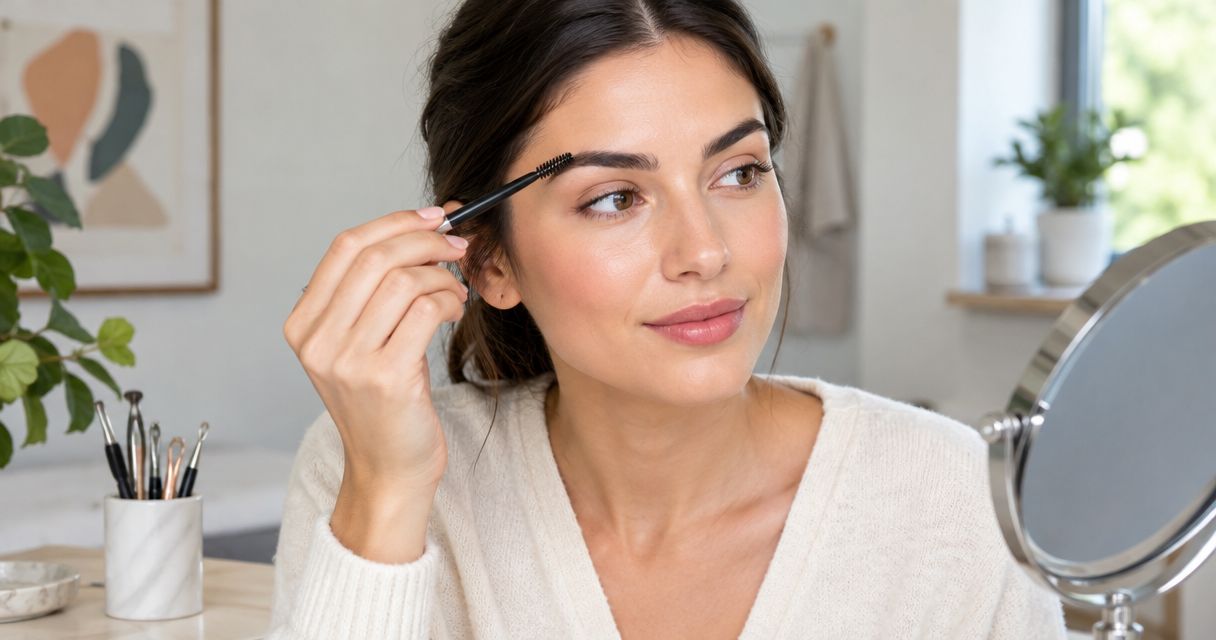
Trimming shortens brow hairs without pulling them from the root. It addresses hairs that extend beyond your preferred outline, not the stray hairs growing outside it.
Brush the brows into their natural direction before deciding what to shorten. Cutting every hair to match a sharply brushed-up line can leave an uneven result when those hairs settle back down.
Trimming pros:
- Leaves the hair roots in place.
- Preserves hairs you do not want to remove entirely.
- Targets excess length rather than brow density.
Trimming cons:
- Does not remove perimeter fuzz or isolated stray hairs.
- Cutting too much can leave gaps or blunt-looking patches.
- Using scissors near the eyes requires careful control.
Best for: Full brows with long hairs that extend beyond the desired outline.
Use short, controlled cuts only where length is the problem. If you cannot clearly see which ends need shortening, leave them alone and ask for professional guidance instead of cutting through a whole section.
Trimming is also a useful reminder that shaping does not always require removal. Sometimes the brow has the fullness you want; the ends simply need attention.
Verdict: Buy trimming for excess length; skip it as a substitute for removing stray hairs.
5. Waxing: best eyebrow shaping method for defined patch cleanup
Waxing removes hair with wax applied to a selected area. It clears several hairs together, which suits a defined patch outside an agreed brow outline.
The trade-off is selectivity. A wax application covers an area rather than choosing each hair separately, so placement matters before removal—not after.
Waxing pros:
- Clears a patch of unwanted hair in one removal.
- Suits perimeter cleanup when the boundary is clearly agreed.
- Can be followed by selective tweezing for remaining strays.
Waxing cons:
- Offers less individual-hair control than tweezing.
- Can irritate or injure skin, including skin affected by certain treatments.
- A misplaced application can remove hairs you intended to keep.
Best for: Defined patches of stray hair outside a shape you already like.
Disclose retinoids, isotretinoin, recent skin treatments, and existing irritation before considering facial waxing. Ask your clinician and practitioner about suitability; do not stop prescribed treatment simply to fit a brow appointment.
Verdict: Buy waxing only for suitable skin and an agreed boundary; skip it when a practitioner advises against it.
Match the method to your actual brow problem
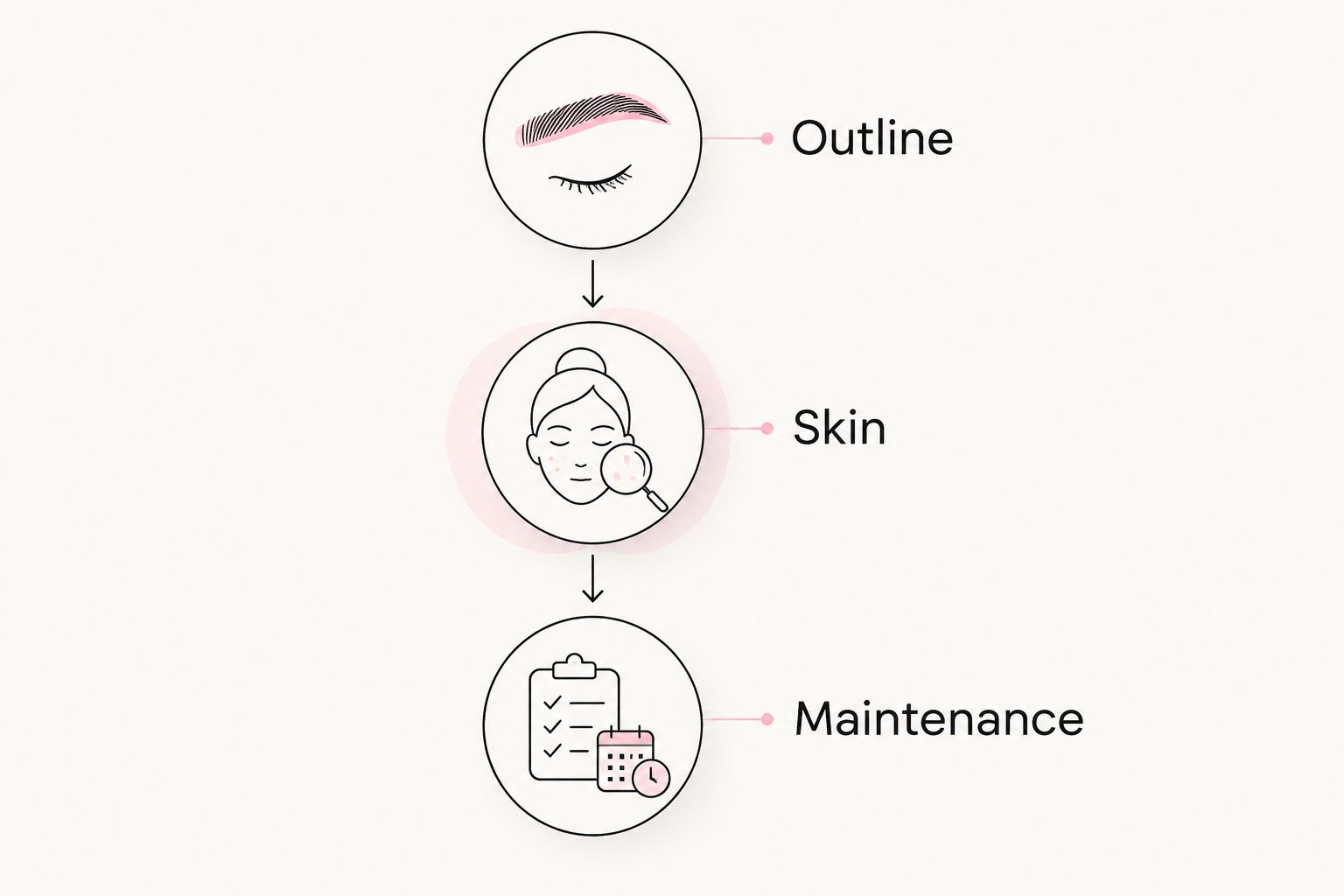
Use 3 checkpoints before any hair removal: outline, skin, and maintenance. They keep the decision tied to your brows rather than the latest technique name.
- Outline: Identify the hairs you want to keep. Ask for a cleanup rather than a redesign if you already like the shape.
- Skin: Check for soreness, broken skin, or active irritation. Share skincare and treatments before choosing removal.
- Maintenance: Decide whether you want occasional professional shaping, small home touch-ups, or both.
Compare your 2 brows at a normal viewing distance before making another correction. Differences in growth and shape do not automatically need fixing. Removing more hair to chase a perfect match can work against your goal of keeping both brows full.
For your 2026 consultation, bring a clear request rather than a rigid promise of identical brows. A reference image can communicate a preference, but the plan should start with the hair you have.
Explore professional brow sugaring
Sugar Me Softly offers brow sugaring in Murray for local Salt Lake Valley clients.
How we ranked the methods
This ranking prioritizes control over the hairs removed, preservation of fullness, and a clear match between technique and task. Tweezing takes the default position because it selects individual hairs. Threading, sugaring, trimming, and waxing each serve a different goal.
The ranking does not treat discomfort, irritation, or results as identical across people. Practitioner skill and the removal boundary matter alongside the method itself.
Which eyebrow shaping method should you choose?
Choose tweezing if you are undecided and only need a few precise corrections. Choose threading for fine fuzz, sugaring for professional wax-free cleanup, trimming for excess length, and waxing for a clearly defined patch on suitable skin.
If you want a substantial shape change, start with a consultation rather than removing hair at home. Your best method is the one that achieves the agreed outline while preserving the hairs you want—not the one that removes the most.
FAQ
What's the best eyebrow shaping method overall?
Tweezing is the best default for precise eyebrow shaping because it lets you select individual hairs. Threading suits fine fuzz, while trimming addresses excess length without removing the roots.
Is eyebrow threading better than waxing?
Threading is a better fit when you want fine-fuzz removal without wax. Waxing suits defined patches, but neither method is universally more comfortable or suitable for every skin condition.
Can I get my eyebrows shaped with sugaring in Murray?
Sugar Me Softly offers brow sugaring in Murray, Utah, for local Salt Lake Valley clients. Discuss your desired shape, skincare, and any irritation before hair removal.
What's the best eyebrow shaping method for sparse brows?
Conservative tweezing is the best starting point for sparse brows because you can target isolated strays. Leave hairs within the brow body alone unless you have agreed on a specific shape change.
Does trimming eyebrows make them grow back thicker?
Trimming does not make eyebrow hair grow thicker because it cuts the shaft rather than changing the follicle. A cut end can look blunter, which is different from increased growth or density.
Can I have eyebrow waxing while using retinoids?
Retinoid use needs a suitability check before eyebrow waxing because skin can be more vulnerable to injury. Tell your practitioner what you use and ask your clinician for advice; do not stop prescribed treatment on your own.
How do I avoid removing too much eyebrow hair?
Agree on the outline before removing hair and pause frequently to view both brows at a normal distance. For home tweezing, select one obvious stray at a time rather than thinning a whole section.
One last thing
A neater brow does not always need fewer hairs. Brush your brows into their natural position before deciding whether the problem is length, placement, or genuinely unwanted growth. That small check can turn a planned removal session into a much more conservative trim.