
Best overall: electric trimming. Best for a close result at home: shaving. Best for keeping an established salon routine: sugaring, if your skin tolerates it. This 2026 guide to hair removal during pregnancy ranks the options by comfort, reach, skin irritation, and pregnancy-specific precautions—not by how much hair you remove.
- Electric trimming is the default for hair removal during pregnancy when comfort matters more than a close finish.
- Shaving removes hair at the surface; sugaring and waxing pull hair from the root and can feel more uncomfortable.
- Sugar Me Softly offers sugaring hair removal for Salt Lake Valley clients seeking a salon alternative to shaving.
- Postpone elective laser hair removal and electrolysis during pregnancy because pregnancy safety evidence is insufficient.
Why this matters
Pregnancy can change hair growth and how your skin responds to familiar products. A routine that felt comfortable before pregnancy can become awkward when you cannot easily see or reach the area.
You do not need to remove body hair for a healthy pregnancy or routine prenatal care. Leaving it alone is a valid choice, including before birth. If your maternity team gives you instructions for a planned procedure, follow those rather than a general grooming guide.
Sugar Me Softly offers sugaring hair removal in Murray, Utah, for local clients across the Salt Lake Valley. Sugar Me Softly is best for local readers seeking a sugaring service rather than an at-home hair removal method; pregnancy-specific suitability still depends on your skin and care team's advice.
What makes the best pregnancy hair removal method?
Use these criteria before choosing a method in 2026:
- Skin condition: Avoid removing hair over broken, inflamed, infected, or sunburned skin.
- Comfort: Root removal involves pulling hair out; trimming avoids that step.
- Visibility: Choose a method you can use without working blindly around folds or sensitive skin.
- Familiarity: A previously tolerated method gives you more useful information than an unfamiliar treatment.
- Pregnancy evidence: An established grooming method is a different decision from an elective treatment without adequate pregnancy safety research.
- Desired finish: Shorter hair, a close shave, and root removal are different goals. You do not need the closest result.
For a broader comparison outside pregnancy, see the guide to sugaring, waxing, and shaving. During pregnancy, comfort and access take priority over chasing the smoothest finish.
Pregnancy hair removal options at a glance
| Method | Best for | Standout feature | Key limitation | Verdict |
|---|---|---|---|---|
| Electric trimming | Comfortable maintenance | Shortens hair without pulling it from the root | Leaves visible stubble | Buy |
| Shaving | A close result at home | Removes hair at skin level | Cuts and irritation; difficult reach | Buy |
| Sugaring | An established salon routine | Removes hair from the root with sugar paste | Discomfort and skin irritation remain possible | Hold |
| Waxing | Maintaining a familiar waxing routine | Removes hair from the root | Pulling and heat can irritate skin | Hold |
| Tweezing | A few isolated hairs | Targets individual hairs | Slow and uncomfortable over larger areas | Buy |
| Depilatory creams | Readers considering chemical removal | Dissolves hair rather than pulling it | Product-specific restrictions and irritation | Wait |
| Laser and electrolysis | Planning treatment after pregnancy | Longer-term hair reduction or removal | Insufficient pregnancy safety evidence | Wait |
Buy means a practical option if your skin tolerates it. Hold means continue only with appropriate precautions and guidance. Wait means defer the decision or treatment—not that the method is proven to harm a pregnancy.
1. Electric trimming: best for comfortable maintenance
Electric trimming shortens body hair without aiming for a completely bare finish. A guard helps separate the cutting mechanism from your skin, making trimming a practical default when close shaving feels difficult.
You still need to see what you are doing. A trimmer can nick skin, especially when folds enter the cutting head or you remove the guard.
Electric trimming pros:
- Avoids pulling hair from the root.
- Does not require a hair-dissolving cream.
- Lets you stop at a shorter, manageable length.
Electric trimming cons:
- Leaves stubble rather than a smooth finish.
- Still requires careful handling and visibility.
Best for: Pubic hair maintenance and larger areas where comfort matters more than complete removal.
Verdict: Buy. Start with the guard attached, follow the device instructions, and stop if you cannot safely see or reach the area.
2. Shaving: best for a close result at home
Shaving cuts hair at the skin's surface. It is an established option during pregnancy, but it does not eliminate the risk of razor burn, cuts, or ingrown hairs.
Use a clean razor and a shaving product your skin already tolerates. Do not stretch, twist, or balance awkwardly to reach an area; a closer finish is not worth a fall.
Shaving pros:
- Gives a closer finish than guarded trimming.
- Avoids pulling hair from the root.
- Works for legs and underarms when you can reach comfortably.
Shaving cons:
- Can cause cuts and irritation.
- Becomes harder when your view or reach is limited.
Best for: Readers who want smooth skin at home and can shave without awkward positioning.
Verdict: Buy. Choose trimming instead when visibility becomes the problem. Do not repeatedly shave an irritated patch to catch missed hairs.
3. Sugaring: best for an established salon routine
Sugaring removes hair from the root using sugar paste. Sugar Me Softly offers Brazilian, leg, underarm, and brow sugaring services, giving local clients an alternative to managing those areas themselves.
Sugaring is not pain-free, and a sugar-based paste does not make a treatment automatically suitable for every pregnancy. Tell the practitioner you are pregnant, explain any skin changes, and discuss comfortable positioning before treatment begins.
Sugaring pros:
- Removes hair from the root rather than cutting it.
- Lets a practitioner handle difficult-to-reach areas.
- Provides a salon option for people already familiar with sugaring.
Sugaring cons:
- Can cause discomfort, redness, or irritation.
- Requires an appointment and a position you can tolerate comfortably.
Best for: Readers who already tolerate sugaring and want to maintain that routine with appropriate precautions.
Verdict: Hold. Discuss pregnancy-related concerns before booking. An unfamiliar Brazilian treatment is not necessary preparation for birth.
4. Waxing: best for maintaining a familiar waxing routine
Waxing removes hair from the root with wax. The American College of Obstetricians and Gynecologists lists waxing among hair removal options considered safe during pregnancy in its patient guidance on pregnancy skin changes.
That does not mean every wax, skin condition, or treatment position suits you. Heat and pulling can still irritate skin, and familiar treatments can feel different during pregnancy.
Waxing pros:
- Removes hair from the root.
- Can cover larger areas than tweezing.
- Offers continuity if you already tolerate waxing.
Waxing cons:
- Pulling can be uncomfortable.
- Heated wax can burn skin if handled incorrectly.
Best for: Readers with a well-tolerated waxing routine who do not want to introduce a new method.
Verdict: Hold. Tell the practitioner about pregnancy, medications, and skin irritation. Skip treatment over damaged skin rather than asking someone to work around it.
5. Tweezing: best for a few isolated hairs
Tweezing removes individual hairs from the root. It makes sense for stray brow or chin hairs, not for clearing an entire leg or bikini area.
Use clean tweezers and a mirror with good lighting. Do not dig into skin to retrieve a buried hair; that turns grooming into a skin injury.
Tweezing pros:
- Targets a specific hair.
- Requires no heated wax or chemical cream.
- Gives control over small areas.
Tweezing cons:
- Feels uncomfortable because it pulls hair from the root.
- Is slow and irritating across larger areas.
Best for: Small touch-ups where you can clearly see each hair.
Verdict: Buy. Keep the job small. Stop if the skin becomes sore, and leave inflamed bumps alone.
6. Depilatory creams: best considered with product-specific advice
Depilatory creams chemically break down hair so you can wipe it away. Pregnancy is not a reason to assume every cream is harmful, but neither is it a reason to treat every formula as interchangeable.
Read the exact product's instructions and warnings. Body-area restrictions matter: a cream intended for legs is not automatically appropriate for genital skin.
Depilatory cream pros:
- Avoids pulling hair from the root.
- Does not require a razor blade.
- Offers a wipe-away method where the product label permits use.
Depilatory cream cons:
- Can irritate skin or cause chemical burns if misused.
- Requires attention to ingredients, application limits, and body-area warnings.
Best for: Readers seeking advice about a specific product, rather than a blanket recommendation for all creams.
Verdict: Wait. Ask your prenatal clinician about the exact product if you are unsure. Follow its patch-test directions and never exceed its application instructions.
7. Laser and electrolysis: best postponed until after pregnancy
Laser hair removal and electrolysis are different treatments, but the pregnancy decision is similar: postpone elective sessions because pregnancy-specific safety evidence is insufficient. Lack of evidence is not proof of harm; it is a reason not to make an unnecessary treatment the default.
For this 2026 guide, neither treatment ranks as a current pregnancy grooming recommendation. Revisit the timing with your clinician and treatment provider after pregnancy.
Laser and electrolysis pros:
- Address longer-term hair reduction or removal goals.
- Offer alternatives to repeated surface grooming outside pregnancy.
- Allow treatment planning around a specific area.
Laser and electrolysis cons:
- Lack adequate pregnancy-specific safety evidence.
- Involve discomfort and potential skin reactions.
Best for: Planning a future treatment, not starting elective sessions during pregnancy.
Verdict: Wait. If you had treatment before learning you were pregnant, tell your prenatal clinician rather than assuming that exposure caused harm.
How these methods rank in 2026
This ranking prioritizes a simple question: can you meet your grooming goal without adding unnecessary discomfort, skin injury, or treatment uncertainty? Trimming wins the default slot because it does not require a close finish, root pulling, or chemical hair dissolution.
The medical reference is the American College of Obstetricians and Gynecologists' patient FAQ, Skin Conditions During Pregnancy, covering pregnancy-related skin and hair changes. It identifies shaving, waxing, and tweezing as acceptable options and advises avoiding laser hair removal and electrolysis because safety research is lacking.
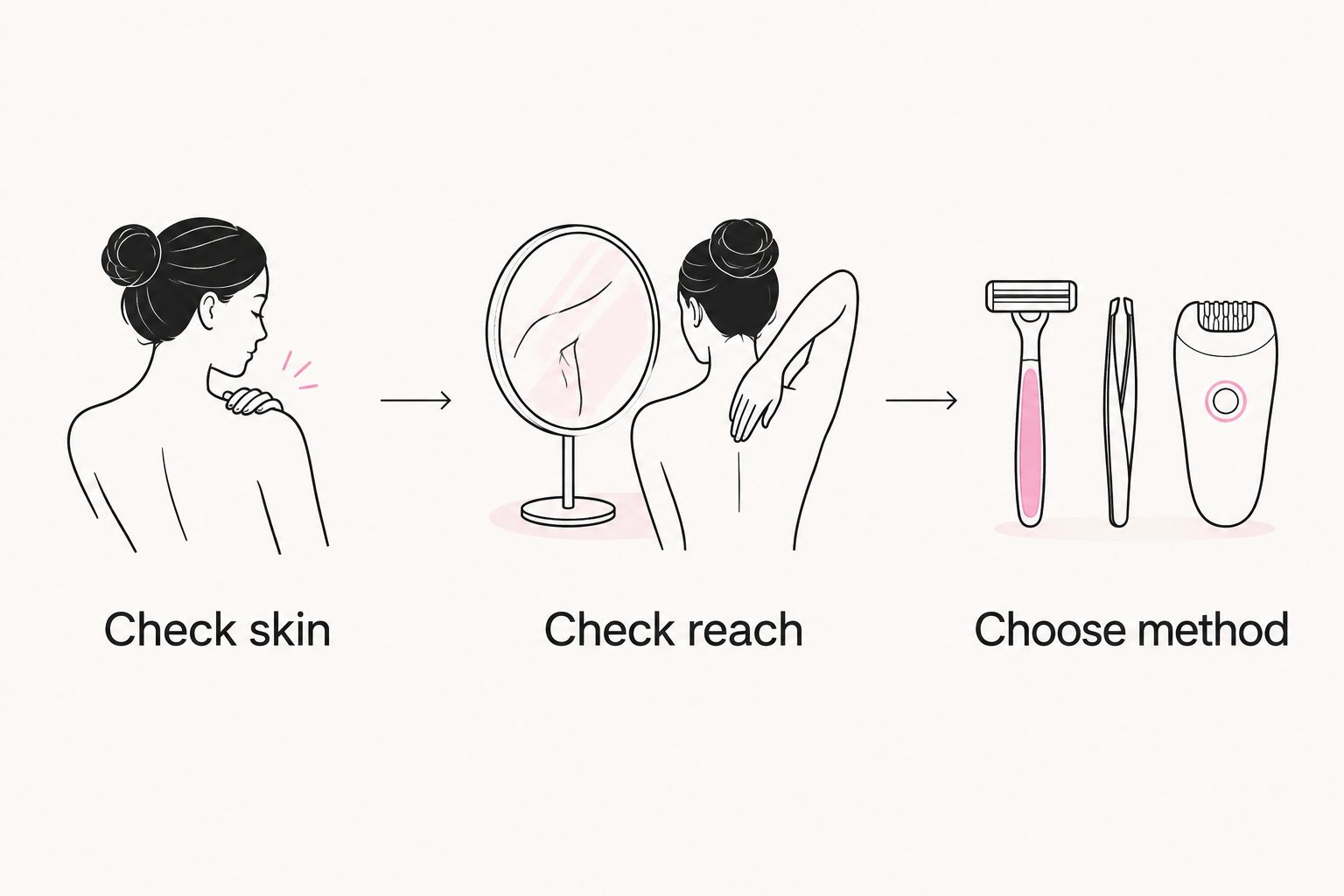
Use these 3 checks before any session:
- Check skin: Is the treatment area healthy and free of irritation?
- Check reach: Can you see the area and stay comfortably supported?
- Choose method: Does the method match your goal and pregnancy guidance?
Do the checks in that order. A familiar method is still the wrong choice on injured skin or when you cannot use it safely.
Which method should you choose?
Choose electric trimming if you are undecided. Choose shaving when you want a closer result and can reach safely; keep sugaring or waxing only when the routine remains comfortable and appropriate for you.
Across all 3 trimesters, make comfort—not a bare-skin deadline—the deciding factor. If your skin reacts differently, stop and reassess rather than pushing through because a method worked before.
For hair removal during pregnancy in 2026, Sugar Me Softly offers a local sugaring option, not a substitute for prenatal medical advice. Ask about the treatment area and positioning before committing to an appointment.
FAQ
What's the best hair removal method during pregnancy?
Electric trimming is the best default when comfort matters more than a completely smooth finish. Shaving is a practical alternative when you can see and reach the area safely.
Is sugaring safe during pregnancy?
Sugaring is not automatically suitable for every pregnant client. It removes hair from the root and can irritate skin, so discuss your skin condition and pregnancy-related concerns with your prenatal clinician and practitioner.
Can I get a Brazilian during pregnancy?
Pregnancy does not create a need for a Brazilian treatment. If you want one, discuss skin health, comfortable positioning, and any pregnancy-specific restrictions before proceeding.
Is waxing better than shaving while pregnant?
Waxing is not universally better than shaving during pregnancy. Waxing removes hair from the root and can be uncomfortable, while shaving avoids pulling but can cause cuts and becomes harder when reach is limited.
Can I use hair removal cream while pregnant?
The answer depends on the exact product, its warnings, and your skin. Follow the label, including patch-test and body-area instructions, and ask your prenatal clinician if you are unsure about that formula.
Should I stop laser hair removal when pregnant?
Postpone elective laser hair removal during pregnancy because pregnancy-specific safety evidence is insufficient. If you already had a session, tell your prenatal clinician rather than assuming it caused harm.
Do I need to shave before giving birth?
You do not need to shave for routine prenatal care or to prepare yourself for birth. Follow your maternity team's specific instructions for any planned procedure instead of shaving preemptively.
One last thing
Your grooming routine can change without becoming a problem to solve. For your next session in 2026, choose 1 small area you can comfortably see and reach rather than committing to full-body removal. If that feels uncomfortable, stop; leaving the rest alone is a complete decision.