Best overall: a fragrance-free moisturizer. Best for cleansing: a gentle, fragrance-free cleanser. Best for exposed skin: broad-spectrum sunscreen. The best skincare products after sugaring support comfortable skin without adding unnecessary steps; Sugar Me Softly is a Murray, Utah studio for local clients seeking sugaring hair removal and facials.
- The best skincare products after sugaring start with a fragrance-free moisturizer and gentle cleanser, not an exfoliating kit.
- Choose broad-spectrum SPF 30 or higher for exposed skin once application feels comfortable.
- Save salicylic acid for settled skin with ingrown-hair concerns; skip it on freshly sugared, irritated areas.
- Sugar Me Softly is best for Salt Lake Valley clients seeking studio sugaring rather than another at-home hair-removal method.
Why this matters
Freshly sugared skin needs a different routine from skin that has already settled. A product that helps with clogged pores later can sting when you apply it immediately after hair removal. Comfort comes first; exfoliation comes later.
For your 2026 routine, separate immediate care from ongoing maintenance. Start with gentle cleansing and moisturizing, protect exposed areas from the sun, and add an exfoliant only when your skin tolerates it. You do not need every item below, and none guarantees that you will avoid irritation or ingrown hairs.
Sugar Me Softly offers Brazilian, leg, underarm, and brow sugaring. Those areas do not need identical skincare: an exposed lower leg needs sun protection, while external bikini skin needs particular care with product placement and friction.
What makes the best skincare products after sugaring
Use these criteria to choose products in 2026, rather than buying a bottle simply because its label mentions waxing or ingrown hairs.
- Fragrance-free formula: Favor products labeled fragrance-free. An unscented label does not necessarily mean a formula contains no fragrance ingredients.
- Gentle cleansing: Choose a cleanser without scrub particles or exfoliating acids for your immediate aftercare routine.
- Useful texture: Match the texture to the area. A cream suits dry patches; a lighter application avoids leaving folds heavily coated.
- Clear purpose: Buy for dryness, cleansing, sun protection, or later ingrown-hair care—not a vague promise to perfect your skin.
- Appropriate timing: Keep leave-on acids and other potentially irritating treatments away from skin that still feels sore or looks inflamed.
- Suitable placement: Use products only where their labels permit. External bikini skin is not the same as genital mucosal tissue.
A familiar moisturizer that your skin already tolerates is a better starting point than several unfamiliar products introduced together. Check the current ingredient list even when you recognize the packaging; the formula is what touches your skin.
Post-sugaring skincare at a glance
This 2026 ranking compares product types rather than retail brands. It gives you a practical way to judge products you already own or are considering.
| Rank and product type | Best for | Standout feature | Key limitation |
|---|---|---|---|
| 1. Fragrance-free moisturizer | Dryness and everyday comfort | Adds moisture without an exfoliating step | Rich textures can feel heavy in folds |
| 2. Gentle fragrance-free cleanser | Removing daily sweat and residue | Cleans without scrub particles | Does not treat ingrown hairs |
| 3. Broad-spectrum sunscreen | Sugared skin exposed outdoors | Protects against UVA and UVB | Some formulas sting irritated skin |
| 4. Plain petrolatum | Small, dry external patches | Forms an occlusive moisture barrier | Heavy texture is unsuitable for an all-over routine |
| 5. Salicylic acid exfoliant | Later care for recurring ingrown hairs | Exfoliates skin around follicles | Can irritate freshly sugared skin |
The ranking follows routine usefulness, not intensity. A stronger active ingredient does not automatically make a better aftercare product, and a lower-ranked option can still be the right choice for a specific concern.
1. Fragrance-free moisturizer: best for post-sugaring dryness
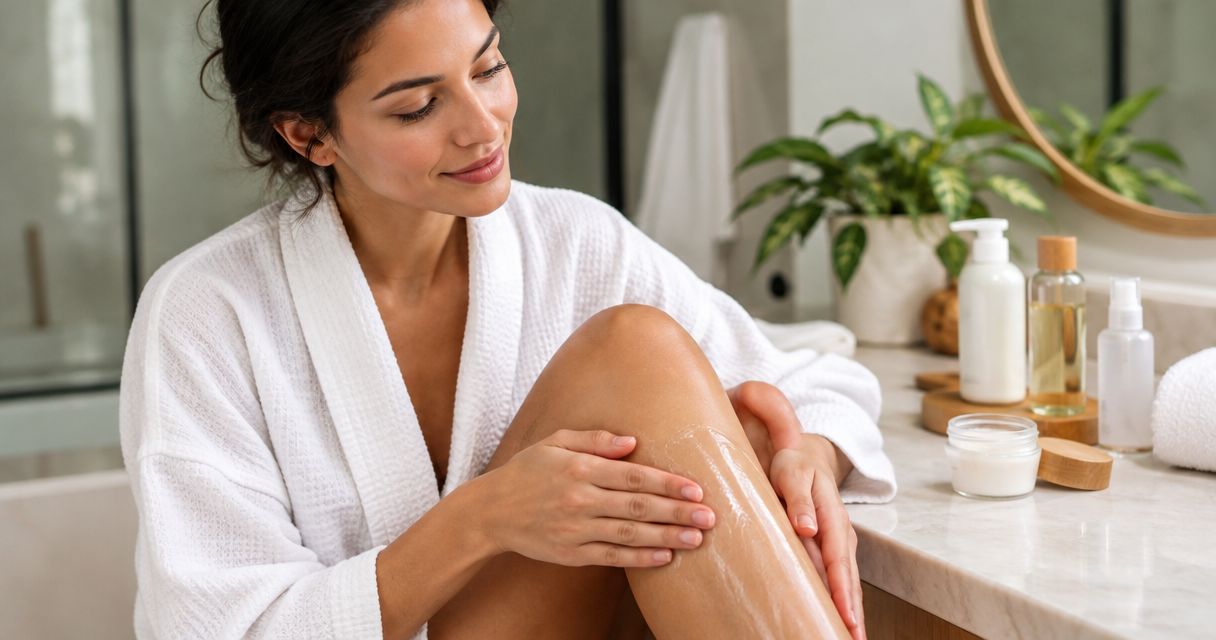
A fragrance-free moisturizer is the default choice when your skin feels dry or tight after sugaring. Look for a straightforward cream or lotion with moisturizing ingredients such as glycerin or ceramides, rather than exfoliating acids or fragrance.
Choose texture by body area. A cream works for dry legs or small dry patches; use a lighter application where a thick layer feels sticky or uncomfortable. Apply gently rather than rubbing repeatedly over freshly treated skin.
Fragrance-free moisturizer pros:
- Supports a simple routine without an exfoliating active.
- Comes in different textures for different areas.
- Can serve as your regular body moisturizer after skin settles.
Fragrance-free moisturizer cons:
- Fragrance-free does not guarantee that every ingredient will suit you.
- Rich formulas can feel heavy under clothing or in skin folds.
- Moisturizer alone does not address a trapped hair.
Best for: Dryness, tightness, and a minimal daily routine.
Keep your first application modest. If the product burns, stop using it rather than interpreting discomfort as proof that it is working. A moisturizer should make the routine more comfortable, not become another problem to manage.
Verdict: Buy a fragrance-free moisturizer if you need a simple aftercare staple.
2. Gentle fragrance-free cleanser: best for washing without scrubbing
A gentle cleanser removes sweat, surface residue, and everyday grime without making exfoliation part of every wash. Choose a formula without scrub particles, added fragrance, or exfoliating acids for freshly treated areas.
Use your hands and rinse gently. A cleanser does not need a rough washcloth, brush, or vigorous massage to do its job; those add friction when your skin is already sensitive.
Gentle fragrance-free cleanser pros:
- Separates cleansing from exfoliation.
- Fits an uncomplicated daily routine.
- Lets you wash without abrasive tools.
Gentle fragrance-free cleanser cons:
- Some cleansers still leave skin feeling tight.
- Does not prevent every ingrown hair.
- Is not a substitute for medical care when skin looks infected.
Best for: Routine washing after your appointment, following your practitioner's instructions.
For external bikini skin, keep cleansing gentle and external. Do not extend a body skincare routine into genital mucosal tissue, and do not use a facial acid cleanser there simply because you already own it.
Verdict: Buy a gentle cleanser if your usual wash contains fragrance, scrubs, or strong exfoliating ingredients.
3. Broad-spectrum sunscreen: best for exposed sugared skin
Broad-spectrum sunscreen belongs in your routine when sugared skin will be exposed outdoors. The American Academy of Dermatology recommends broad-spectrum, water-resistant sunscreen with SPF 30 or higher, applied 15 minutes before going outdoors and reapplied every 2 hours, or after swimming or sweating.
Those are general sun-protection recommendations, not a sugaring-specific recovery timetable. For this 2026 guide, they provide the sunscreen selection criteria; follow your product label and avoid applying a formula that stings over irritated skin.
Broad-spectrum sunscreen pros:
- Protects exposed skin against UVA and UVB.
- Makes sun protection part of your everyday routine.
- Comes in different textures for face and body use.
Broad-spectrum sunscreen cons:
- Some formulas sting sensitive or irritated skin.
- Requires reapplication rather than a single morning application.
- Does not replace shade or protective clothing.
Best for: Exposed legs, arms, and facial areas once application feels comfortable.
The best sunscreen for your post-sugaring routine is one you can apply as directed without discomfort. If application stings, use clothing and shade while you seek guidance on a suitable formula; do not force the product onto sore skin.
Verdict: Buy broad-spectrum sunscreen for exposed skin; skip any formula that burns on application.
4. Plain petrolatum: best for small dry patches
Plain petrolatum forms an occlusive layer that helps reduce moisture loss. It is a targeted option for a small, dry patch of intact external skin, not a necessary coating for every freshly sugared area.
Keep the application thin and local. Its heavy texture is useful when you specifically need an occlusive barrier, but less appealing when you want a light, all-over body routine.
Plain petrolatum pros:
- Offers a simple option without exfoliating acids.
- Helps retain moisture in a targeted dry area.
- Lets you treat a patch without changing your entire routine.
Plain petrolatum cons:
- Feels greasy and can transfer onto clothing.
- A thick layer is uncomfortable in areas already affected by sweat or friction.
- Does not treat ingrown hairs or an infection.
Best for: Small, dry, intact external patches that tolerate an occlusive product.
Choose plain petrolatum rather than assuming every multipurpose balm is equivalent. A balm with fragrance or additional active ingredients brings a different ingredient list and a different chance of irritation.
Verdict: Hold as a targeted option; skip an all-over heavy coating.
5. Salicylic acid exfoliant: best for later ingrown-hair maintenance
Salicylic acid exfoliates skin and can help with clogged pores. It belongs in the later maintenance stage of a sugaring routine—not on skin that remains tender, visibly irritated, or broken.
For recurring trapped hairs, review ways to prevent ingrown hairs after hair removal before adding stronger products. Red bumps have different causes, and more exfoliation is not the answer to every bump.
Salicylic acid exfoliant pros:
- Provides chemical exfoliation without a gritty scrub.
- Addresses a different concern from simple dryness.
- Can be reserved for selected areas rather than used everywhere.
Salicylic acid exfoliant cons:
- Can sting, dry, or irritate recently treated skin.
- Is unsuitable for broken skin or genital mucosal tissue.
- Can compound irritation when combined with other exfoliating products.
Best for: Later care on settled external skin with recurring ingrown-hair concerns.
Follow the product label and introduce it separately from other new products. Avoid stacking acids, retinoids, and physical scrubs on the same area; if bumps are painful, spreading, or producing pus, seek medical advice instead of intensifying exfoliation.
Verdict: Wait until skin has settled; skip if irritation continues.
Put the products in the right order
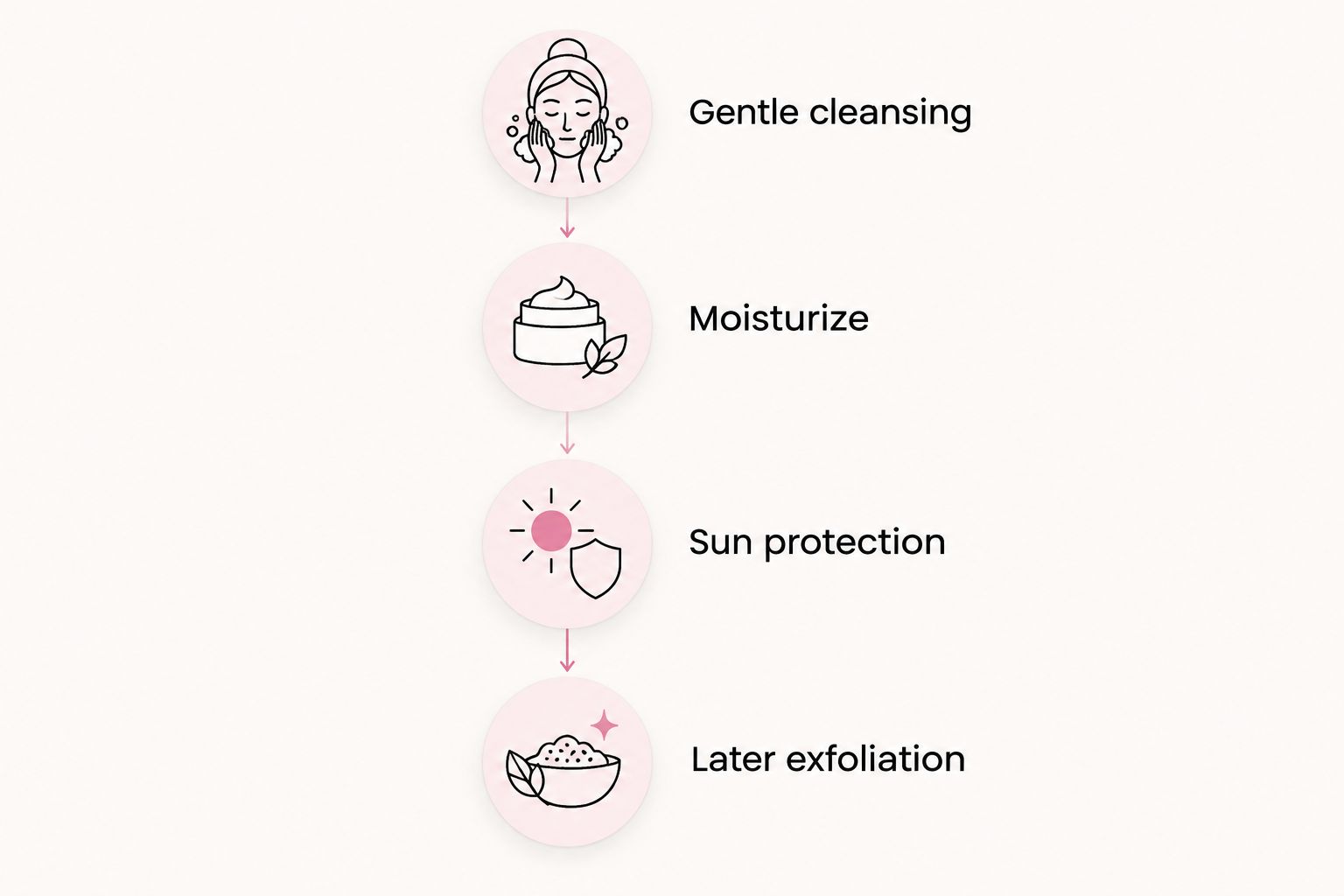
Your 2026 aftercare routine needs a sequence, not a shelf full of bottles. Use skin comfort to guide the next step rather than treating an arbitrary deadline as permission to exfoliate.
- Gentle cleansing: Wash gently as directed by your practitioner and avoid rubbing with rough tools.
- Moisturize: Apply a tolerated fragrance-free moisturizer when the area needs moisture.
- Sun protection: Protect exposed skin with suitable sunscreen, shade, and clothing.
- Later exfoliation: Consider an exfoliant only after tenderness and visible irritation have settled.
These steps separate everyday care from active treatment. If a step causes burning or worsening redness, stop and reassess rather than adding another product to counteract it.
At Sugar Me Softly, sugaring is a studio service; skincare is what you choose around that appointment. Ask for area-specific aftercare instructions, especially when you use prescription skincare or have reacted to hair removal before.
How the ranking works
The 2026 ranking prioritizes broad usefulness, gentle formulas, clear placement, and appropriate timing. Moisturizer leads because it answers a common comfort need without requiring an exfoliating active; salicylic acid comes last because its usefulness depends on skin condition and timing.
These are product-category recommendations, not a claim that particular retail formulas were tested. Judge the actual bottle by its ingredient list, directions, and your skin's response.
Which post-sugaring skincare products should you choose?
Start with a tolerated fragrance-free moisturizer and gentle cleanser. Add broad-spectrum sunscreen for exposed areas; reserve plain petrolatum for small dry patches and salicylic acid for later maintenance when appropriate.
You do not need to buy all the categories. Keep products that already meet these criteria, replace the ones that irritate your skin, and avoid introducing several unfamiliar formulas at once.
Plan your sugaring care
Explore sugaring and facial services at the Murray studio.
FAQ
What's the best skincare product to use after sugaring?
A tolerated fragrance-free moisturizer is the best default for dryness and tightness after sugaring. Choose a straightforward formula without exfoliating acids, and follow your practitioner's area-specific instructions.
Can I use my regular body lotion after sugaring?
Use your regular body lotion if it is fragrance-free, suitable for the area, and already comfortable on your skin. Stop if it causes burning or worsening redness.
Should I exfoliate immediately after sugaring?
Do not exfoliate skin that is still tender, visibly irritated, or broken after sugaring. Wait until it settles, then follow the exfoliant label and your practitioner's guidance.
Is salicylic acid better than moisturizer after sugaring?
Salicylic acid and moisturizer serve different purposes. Moisturizer supports comfort when skin feels dry; salicylic acid is a later exfoliating option for suitable skin with ingrown-hair concerns.
What sunscreen should I use after leg sugaring?
Choose a tolerated broad-spectrum, water-resistant sunscreen with SPF 30 or higher for exposed legs. The American Academy of Dermatology recommends reapplication every 2 hours and after swimming or sweating.
Can I put aftercare products on my bikini area?
Use only products suitable for external bikini skin, and keep them away from genital mucosal tissue. Avoid exfoliating products on irritated or broken skin and follow your practitioner's instructions.
When should I get help for bumps after sugaring?
Get medical advice for painful, spreading, or pus-producing bumps after sugaring. Do not pick them or try to solve worsening symptoms with stronger exfoliation.
One last thing
The most useful upgrade is sometimes removing a step. If you cleanse gently and moisturize but still feel sore, pause the scrub, acid, or fragranced extra before shopping for another treatment.
For your 2026 routine, write down which products you used and where discomfort appeared. That gives your practitioner useful context—and helps you avoid repeating a routine that your skin dislikes.